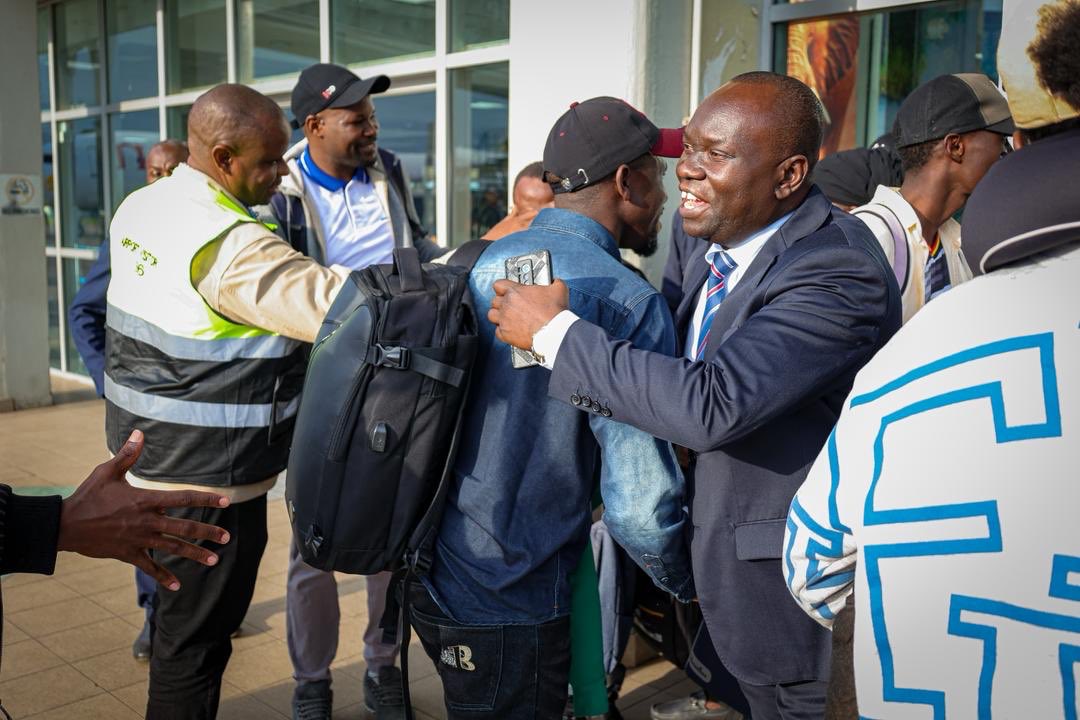
A group of 43 Ugandan students have safely returned home after being repatriated by the Ugandan government following weekend airstrikes conducted by United States and Israel against Iran.
The evacuation was coordinated by Uganda’s ambassador in Tehran, who organised transport by bus to the Turkish border and onward to Istanbul, from where the students flew to Entebbe International Airport.
Upon arrival, the students spoke of their harrowing experiences during the bombing campaign. Sharon Twiine, an international relations student at Ahlul Bayt International University in Tehran, described the ordeal as “scary, traumatising, and I wouldn’t wish anyone to experience such.”
Another student, Oscar Nyegyema, recalled the moment a nearby site was struck: “We could hear the ground trembling, we could hear the ground shake. We were all scared, we were all feeling devastated, we really did not know whether we could make it out.” Despite the trauma, Nyegyema intends to return to Iran to complete his degree.
Some Ugandan students opted to remain in Iran, citing concerns that returning home could jeopardize their academic progress. Aloisius Ssegawa explained,
“They believe that if they return home, the two years spent in their four-year degree may go to waste because they may not be able to afford the ticket back.”
Twiine noted the emotional toll of the experience, adding,
“I love to study, I love to practice what I will learn from Iran, but I think I will have to get therapy first.”
Repatriation efforts for foreigners in Iran are ongoing, with numbers changing daily. For example, Sierra Leone has evacuated 24 nationals and diplomatic staff, while the South Africa has advised citizens in the Middle East to leave multiple countries in anticipation of further attacks.
The situation remains fluid, highlighting the continued risks faced by foreign nationals amid escalating military tensions in the region.