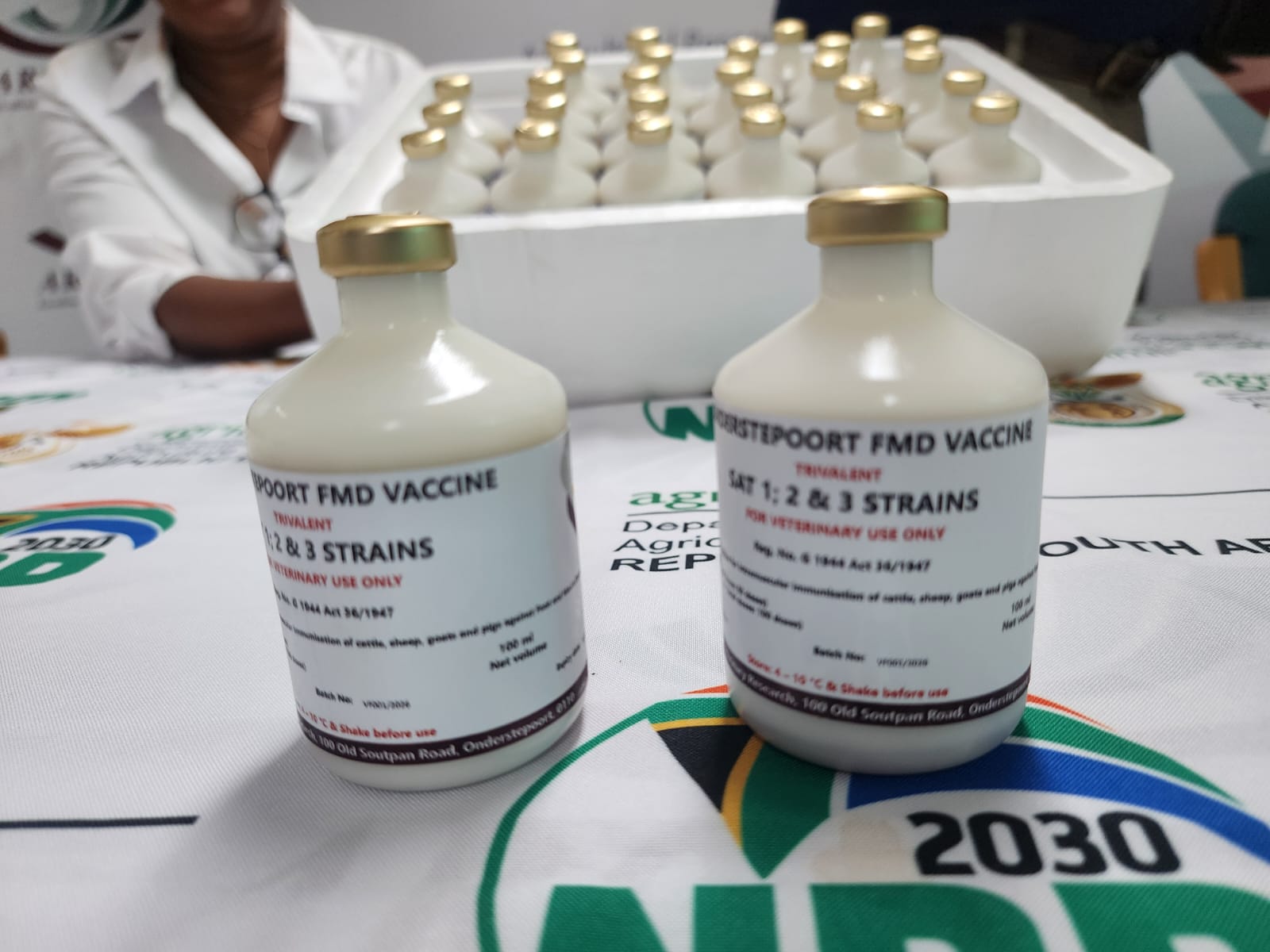
Pretoria, South Africa – The country is facing its worst outbreak of foot-and-mouth disease (FMD) in decades, but the first locally-produced vaccine in over 21 years could become a major ally in fighting the crisis.
For livestock farmers, recent months have been marked by mounting losses as herds were infected and quarantined. While FMD is rarely fatal, it causes painful blisters in the mouths and under the hooves of cattle, leading to reduced milk production and restrictions on trade. The outbreak has severely impacted farmers’ livelihoods, export markets, and veterinary costs.
Government Strategy Against the Outbreak
On Friday, the South African government announced the resumption of local vaccine production, with the first batch containing 12,900 multi-strain doses. Until now, the country had largely relied on imported vaccines.
The new vaccines are part of a multi-phase plan to regain control over the outbreak and ease the burden on farmers:
- By January 2026: Around two million animals had already been vaccinated.
- By March 2026: An additional five million doses are expected to be available.
- Through the summer: Stricter testing and monitoring will be implemented to reduce spread and detect new cases faster.
- By January 2027: Authorities aim to reduce outbreaks by more than 70% in high-risk areas.
Economic and Social Impact
The outbreak has disrupted South Africa’s livestock industry, with farmers losing access to export markets and facing rising costs. The introduction of locally-produced vaccines is expected to accelerate the vaccination campaign, restore confidence in the sector, and reduce reliance on imports.
Conclusion
The launch of South Africa’s first locally-produced FMD vaccine in over two decades marks a turning point in the fight against the devastating outbreak. With millions of doses planned and stricter monitoring measures, authorities hope to protect herds, revive trade, and bring relief to farmers across the country.