
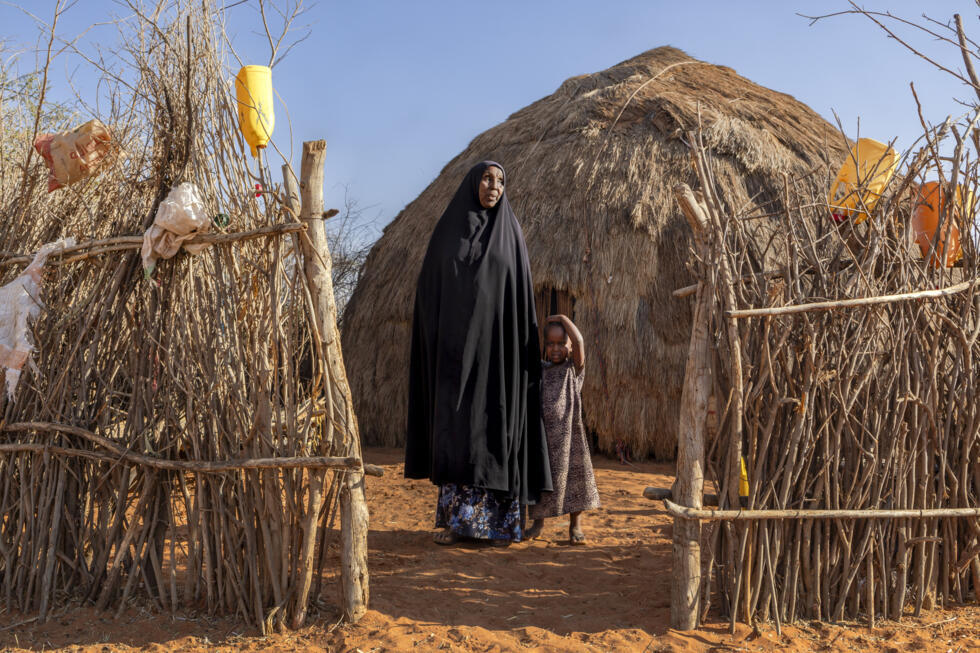
Mandera, Kenya – For nearly a year, repeated misdiagnoses left 60-year-old Harada Hussein Abdirahman fighting for her life as Kenya grapples with its worst outbreak of kala-azar, also known as visceral leishmaniasis. The disease, spread by sandflies, is one of the most dangerous neglected tropical illnesses, with a fatality rate of up to 95 percent if untreated.
Rising Cases and Expanding Risk
According to the Ministry of Health, kala-azar cases in Kenya spiked from 1,575 in 2024 to 3,577 in 2025, spreading into previously unaffected regions and becoming endemic. Health officials warn that millions could be at risk, driven by climate change and expanding human settlements.
“Climate change is expanding the range of sandflies and increasing the risk of outbreaks in new areas,” said Dr. Cherinet Adera, researcher at the Drugs for Neglected Diseases Initiative in Nairobi.
Human Toll in Mandera
Abdirahman, a grandmother from Mandera County, was bitten while herding livestock. With only three treatment facilities in the region, she relied on a local pharmacist who misdiagnosed her with malaria and dengue fever for nearly a year.
“I thought I was dying. It is worse than all the diseases they thought I had,” she told AFP.
Her ordeal left her with hearing problems after undergoing harsh treatment to remove toxins from her body.
The outbreak has also hit migrant workers at quarry sites in Mandera, where at least two deaths were reported last year. Authorities restricted movement at dusk and dawn when sandflies are most active to curb transmission.
“We did not know about the strange disease causing our colleagues to die. We were so scared,” said Evans Omondi, a worker from western Kenya.
Regional and Global Context
East Africa accounts for more than two-thirds of global kala-azar cases, according to the World Health Organization. In 2023, six of the most-affected African nations adopted a framework in Nairobi to eliminate the disease by 2030.
Yet experts warn that Kenya’s health system is underprepared.
“There are very few facilities in the country able to actively diagnose and treat kala-azar,” said Dr. Paul Kibati, tropical disease expert at Amref. “Mistakes in testing and treatment can be fatal.”
Treatment can last up to 30 days, involving daily injections and blood transfusions, costing as much as 100,000 Kenyan shillings ($775) excluding drug costs.
Environmental Drivers
The sandfly thrives in cracks in poorly plastered mud houses, anthills, and soil fissures, multiplying during rainy seasons after prolonged drought. Northeastern Kenya, Ethiopia, and Somalia have all faced devastating droughts in recent months, creating ideal conditions for outbreaks.
“Kala-azar affects mostly the poorest in our community,” Kibati said, noting that malnutrition and weak immunity exacerbate vulnerability. “We are expecting more cases when the rains start.”
Conclusion
Kenya’s kala-azar outbreak highlights the urgent need for expanded diagnostic facilities, affordable treatment, and climate-sensitive health strategies. As cases rise and the disease spreads to new regions, the fight against this neglected tropical illness is becoming a critical test of resilience for communities in arid and semi-arid areas.

