
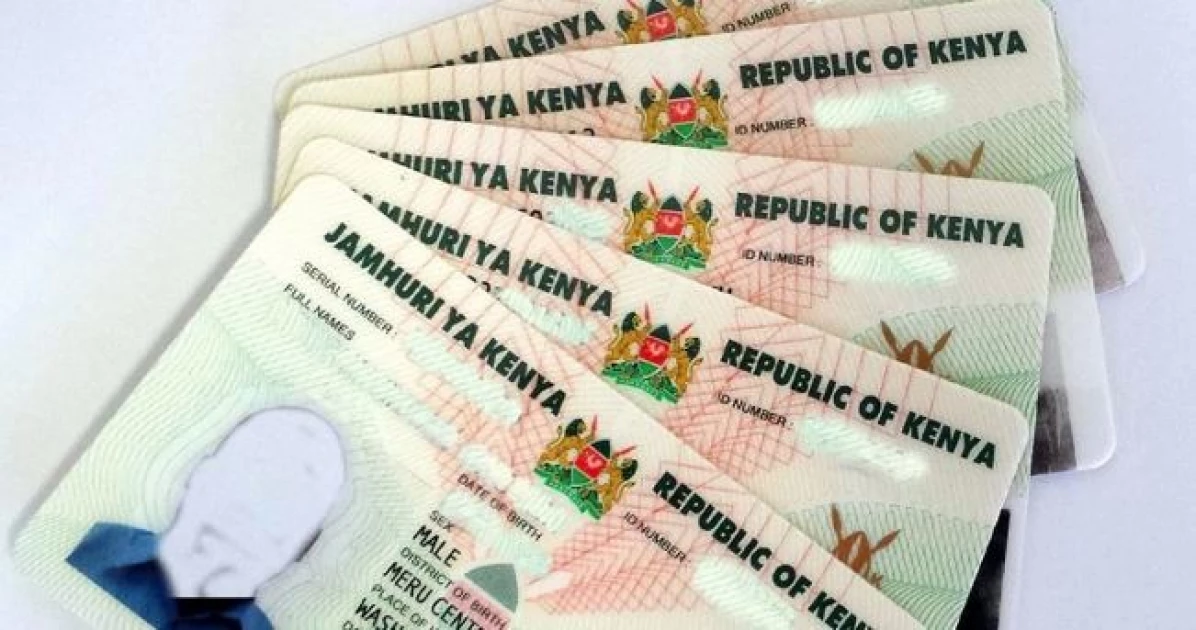
Interior Principal Secretary Dr. Raymond Omollo has announced key government reforms aimed at broadening access to national identification documents, emphasizing that President William Ruto has moved to eliminate historical obstacles that left many Kenyans especially in marginalized counties without IDs.
Speaking during a mass ID registration exercise in Masara, Suna West, Migori County, Dr. Omollo highlighted that the government has scrapped the extra vetting process that had long made it difficult for residents of counties such as Homa Bay, Siaya, Busia, Garissa, and Mandera to acquire identity documents.
“His Excellency President Ruto took away the requirement for extra vetting for the residents of those counties so that they could be able to access identification documents just like the rest of Kenyans,” he said.
In addition, the PS announced that the government had removed application and replacement fees for ID cards, enabling broader citizen participation without financial constraints. “Because of that, Kenyans from across the length and breadth of the country can now access identification cards,” he added.
The registration event drew hundreds of residents seeking to obtain IDs. Dr. Omollo stressed that expanded ID coverage would help the government plan and deliver services more efficiently, while also underscoring the civic importance of possessing a national ID as a gateway to obtaining a voter’s card.
Dr. Omollo also touched on political implications, noting that local leaders have expressed support for President Ruto’s re-election ahead of the 2027 General Election. “Because His Excellency President Ruto has delivered for us over the last three years, and he continues to deliver for us, when we go to elections next year, we have agreed with the leaders of this region that we will give him a second term,” he said.
The reforms follow President Ruto’s February 2025 proclamation scrapping a 60-year-old vetting requirement for residents of border counties, a security measure initially introduced after the Shifta insurgency of the 1960s, when ethnic Somalis, Muslim Borana, and others attempted to secede and join Somalia. The move also coincided with a High Court directive for a fresh census in three Northeastern counties, signaling both administrative and political recalibrations in the region.
These changes are expected to significantly expand ID coverage, reduce historical inequities, and facilitate greater participation in civic and political processes across Kenya.

