
Haiti’s government is moving forward with plans to hold general elections this year despite persistent gang violence, according to André Jonas Vladimir Paraison, interim head of Haiti’s National Police. Speaking to the Associated Press on Friday, Paraison said authorities are still finalizing a strategy to conduct the polls safely.
“We ourselves play our part, putting ourselves at the forefront where situations become heated, to see if we can contain what we can cover up or what we must clean up, and allow Haiti to return to normal conditions,” Paraison said.
The government has scheduled general elections for late August 2026, with a potential runoff in early December. The Provisional Electoral Council also announced that political party and candidate registrations will open from March 2 to March 12.
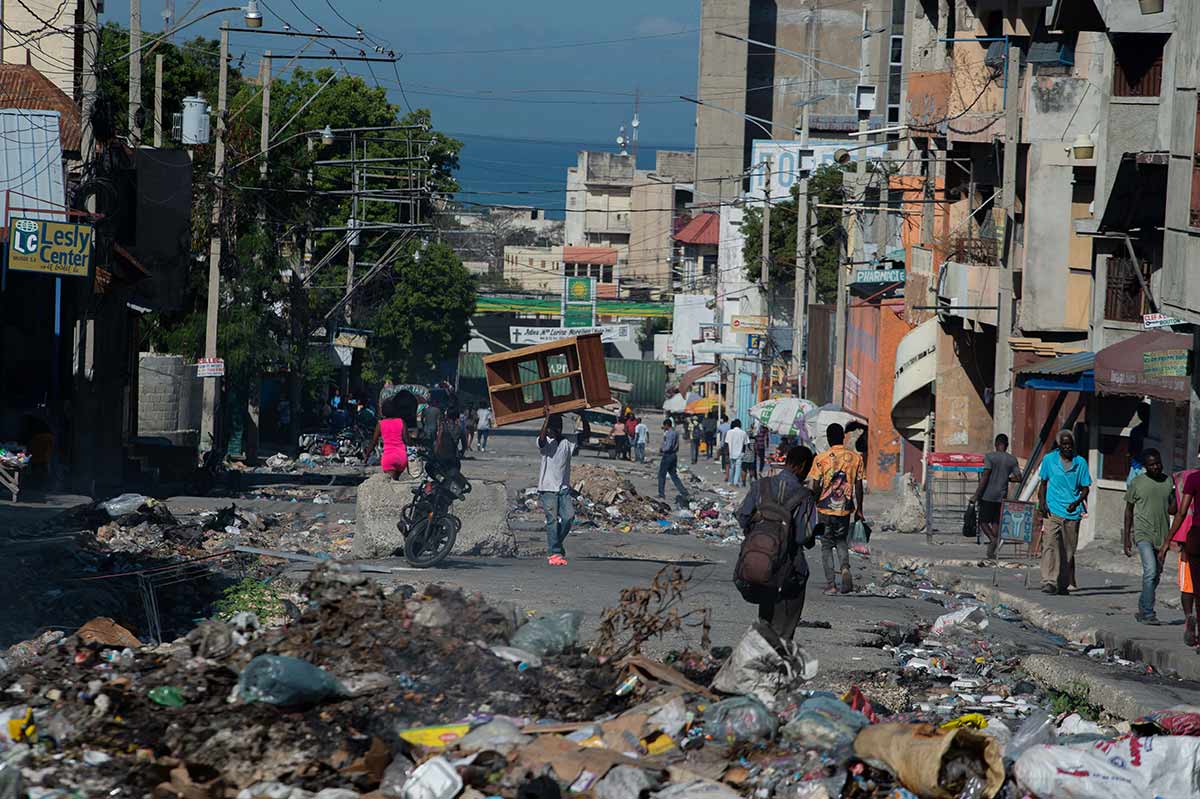
Haiti has not held a general election in over a decade, and the security situation has deteriorated significantly since the assassination of President Jovenel Moise in July 2021. Gang violence has displaced an estimated 1.4 million people, with armed groups controlling nearly 90% of Port-au-Prince and key territories in the central region. The crisis has forced thousands of businesses and hundreds of schools to close, while last year’s U.N. statistics reported over 5,900 deaths and 2,700 injuries nationwide.
Paraison noted that Haiti’s security situation has “exploded,” but the National Police is taking steps to restore order. Recently, nearly 900 cadets graduated, though Paraison emphasized that the force remains understaffed. The U.N. has highlighted that Haiti has fewer than two officers per 1,000 residents, far below international standards.
Despite limited resources, the police have conducted operations in gang-controlled areas, reclaiming strategic zones such as Carrefour-Aéroport, a critical intersection in the capital. Paraison also highlighted the heavy armament of gangs, noting that weapons are smuggled into Haiti from abroad, primarily from the U.S., including Florida. Estimates suggest the country may hold up to half a million small arms, with increasingly sophisticated weapons such as .50 caliber sniper rifles and belt-fed machine guns circulating among gangs.
Haiti’s police force continues to operate alongside a U.N.-backed mission led by Kenyan officers, though the mission has struggled with understaffing and limited funding. Plans are underway to replace it with a specialized gang suppression force in the coming months.
As Haiti prepares for its first general elections in over ten years, authorities face the dual challenge of ensuring security for voters while reasserting control over territories long dominated by armed gangs.

