Tensions in the Middle East escalated sharply over the weekend after Iran launched missiles at targets in Israel and Gulf Arab states in response to the killing of Supreme Leader Ayatollah Ali Khamenei in a joint U.S.-Israel airstrike on Saturday. The strikes prompted U.S. President Donald Trump to issue warnings of further retaliation should Iran escalate.
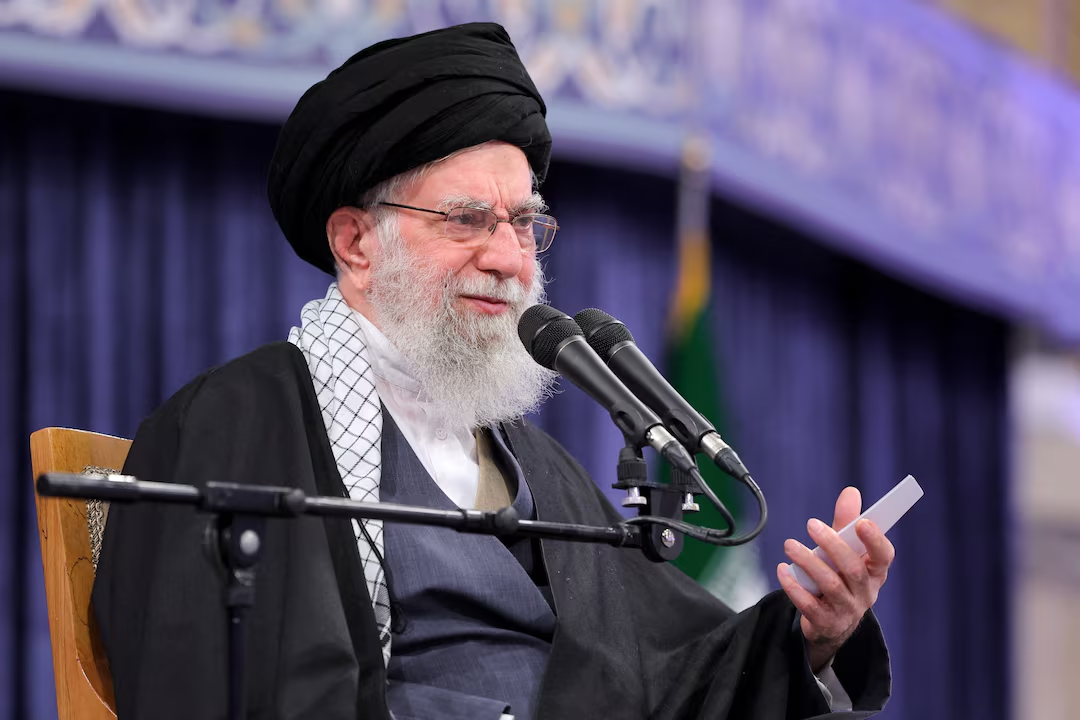
Khamenei, 86, was killed at his Tehran office in the airstrike, which also targeted Iran’s top military officials, including Gen. Abdol Rahim Mousavi and Defense Minister Gen. Aziz Nasirzadeh, along with the head of the Revolutionary Guard and a senior security adviser. Iran acknowledged the deaths and vowed massive retaliation, with the Revolutionary Guard describing the forthcoming attacks as the “most intense offensive operation” in its history.
“You have crossed our red line and must pay the price,” said Iranian parliamentary speaker Mohammad Bagher Qalibaf, warning of devastating blows to Israeli and American forces. Trump responded via social media, asserting that any further Iranian attacks would be met with unprecedented force.
- Immediate Retaliation and Regional Impact
Following the initial strikes, Iran targeted U.S. military installations in Bahrain, Kuwait, and Qatar, as well as sites in Israel. The Israeli military reported dozens of missiles fired, many intercepted, while Magen David Adom confirmed a civilian death in the Tel Aviv area. Air defense activity was reported over Dubai, with shrapnel from intercepted missiles causing fires at the city’s port and the iconic Burj Al Arab hotel. Saudi Arabia and Jordan also reported intercepting missile and drone attacks.
Flights across the Middle East were disrupted, and the attacks sparked concern over the Strait of Hormuz, a critical chokepoint for global oil exports. Analysts warned that prolonged instability could have significant economic repercussions worldwide.
- Domestic Fallout in Iran
Khamenei’s death has thrown Iran’s future into uncertainty, as he had centralized power over the clerical establishment and the Revolutionary Guard for decades. Iran quickly formed a transitional council to govern until a new supreme leader is chosen. Public reactions in Tehran were mixed, with some residents celebrating, while mourners raised black flags over shrines, and the government declared 40 days of mourning and a seven-day public holiday.
Reports also indicated that several members of Khamenei’s family were killed in the strikes, including a daughter, son-in-law, daughter-in-law, and grandchild.
- Coordination and Military Strategy
The joint U.S.-Israel operation was reportedly planned for months, targeting Revolutionary Guard command facilities, air defense systems, missile and drone launch sites, and military airfields. Israeli military officials confirmed that hundreds of targets were struck across Iran. The U.S. reported no casualties at its bases and minimal damage despite Iranian missile and drone retaliation.
Critics, including Democrats in the U.S., decried the strike as lacking congressional authorization, though the White House stated that congressional leaders had been briefed in advance.
- Civilian Toll and Infrastructure Damage
The strikes caused significant civilian casualties, with at least 115 people reported killed in southern Iran when a girls’ school was struck, and dozens more injured. Additional attacks reportedly hit residential areas, sports halls, and a school hall in the Lamerd region, according to Iran’s state news agency IRNA. Hundreds of civilian deaths and injuries have been cited by Iranian diplomats at the United Nations Security Council.
- Looking Ahead
The attacks mark a dramatic escalation in U.S.-Iran-Israel tensions, creating uncertainty over regional stability and the future of Iran’s leadership. Observers warn that the conflict could rapidly escalate, with potential consequences for global security and energy markets.