
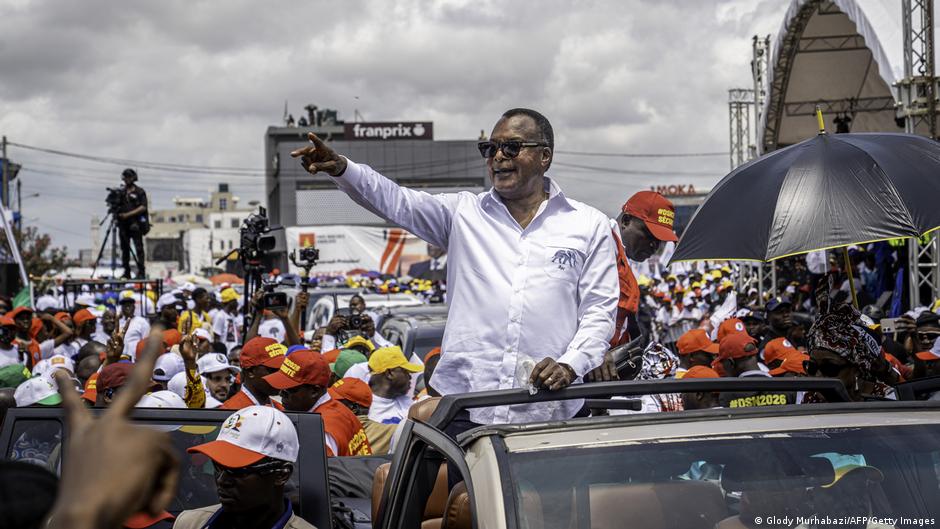
Brazzaville, Republic of the Congo – Voters in the Republic of the Congo are set to head to the polls on Sunday in a presidential election widely expected to extend the rule of longtime leader Denis Sassou Nguesso.
Sassou Nguesso, 82, has dominated the country’s political landscape for decades, having ruled the oil-rich Central African state for all but five years since first taking power in 1979. In the upcoming vote, he faces six relatively unknown challengers after major opposition parties opted not to field candidates.
Opposition Figures Absent
Two prominent opposition leaders, Jean‑Marie Michel Mokoko and André Okombi Salissa, have remained in prison for nearly a decade after being convicted of undermining state security. Their absence from the race has further weakened the opposition field ahead of the vote.
Concerns Over Political Climate
Rights groups and activists say the election is taking place amid a tense political atmosphere. Critics accuse authorities of restricting dissent through arrests of activists, suspensions of opposition parties and strict monitoring of public gatherings.
Human rights activist Joe Washington Ebina said recent security operations targeting youth gangs locally known as “bébés noirs” have heightened tensions across the country.
According to analysts, such developments have contributed to a climate in which many citizens feel uneasy about publicly expressing political opinions. Security personnel were allowed to vote earlier in the week, a move observers say frees them to oversee polling stations during the election.
Political analyst Maja Bovcon noted that early voting by security forces has previously been used to strengthen control over the electoral environment.
Government Rejects Allegations
Authorities have rejected accusations of political repression or bias. Anatole Collinet Makosso said the country has mechanisms in place to ensure the credibility of the vote.
“No election is won in advance,” Makosso said, adding that oversight institutions are prepared to guarantee transparency and fairness.
Mixed Public Sentiment
Campaign visibility has largely favoured the incumbent, with Sassou Nguesso’s campaign posters widely displayed in major cities such as Brazzaville. Opposition campaigners, meanwhile, have relied on small gatherings and distributing leaflets in local markets.
Some voters say they support the president’s emphasis on stability, while others have called for political change after decades under the same leadership.
Opposition candidate Uphrem Dave Mafoula told supporters during a rally that the country needed a new direction. “Forty years of suffering is enough,” he said, criticizing the government’s economic and social record.
Low Turnout Expected
More than 3.2 million voters are eligible to participate in the election. However, analysts and civil society groups predict low voter turnout, citing widespread political fatigue and skepticism about the outcome.
Official turnout in the 2021 presidential election was nearly 68 percent, but observers believe participation could drop significantly this time.
Many citizens say they see little point in voting. “I prefer to stay at home rather than go and vote,” said Boudibangoyi Brunel, a student in Brazzaville.
Observers say the election outcome is likely to reinforce Sassou Nguesso’s decades-long hold on power unless unexpected shifts in voter sentiment occur.

