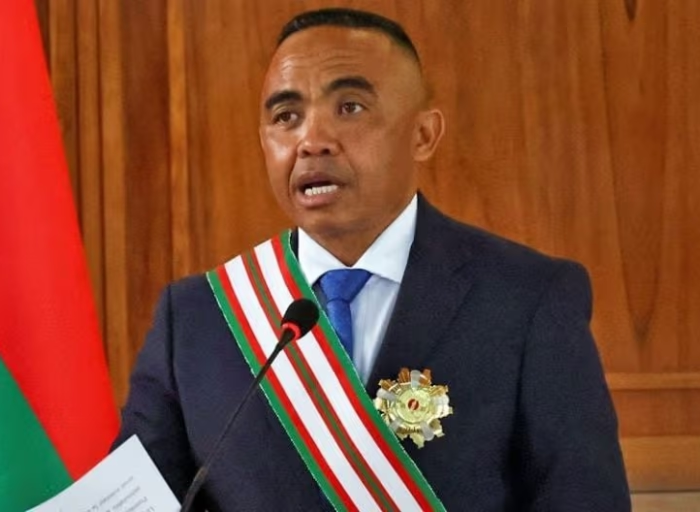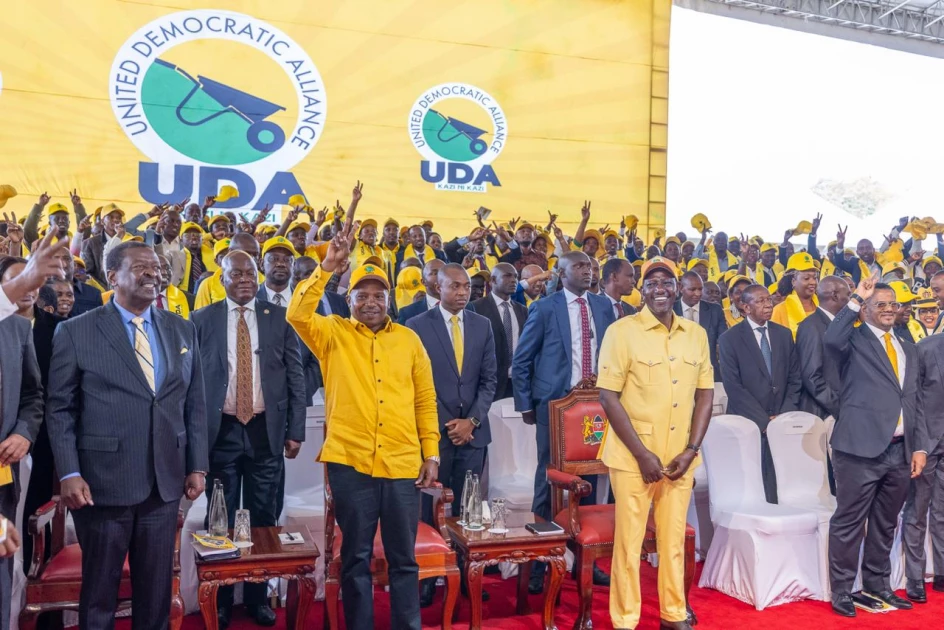
Nairobi, Kenya – Deputy President Kithure Kindiki has called on leaders and aspirants of the United Democratic Alliance (UDA) to be ready to account for the party’s 2022 manifesto pledges, stressing that the administration’s top priority remains full implementation of its agenda.
Speaking at a meeting with UDA aspirants at State House on Wednesday, Kindiki said party leaders must be prepared to explain what was promised, what has been delivered so far, and how the government intends to complete the remaining commitments.
“At the time we asked Kenyans for their votes, we presented a clear manifesto, and that manifesto continues to guide our leadership. Our commitment is to implement it one hundred percent,” Kindiki affirmed.
Economic Indicators and Progress
The Deputy President cited what he described as improvements in macroeconomic indicators since President William Ruto took office in 2022:
- The Kenyan shilling, which stood at Sh165 to the US dollar, has stabilized at around Sh128–129.
- Inflation has declined from 9.6% to about 4.4%.
- Foreign exchange reserves have risen from $5.7 billion to $12.1 billion.
Agriculture and Livestock Gains
Kindiki emphasized that agriculture and livestock, which support the majority of Kenyans, have been prioritized:
- Fertilizer prices reduced from Sh7,000 per bag in 2022 to Sh2,500.
- Maize production increased from 44 million bags in 2022 to 75 million in 2025.
- Coffee prices rose from Sh70/kg to between Sh120–160/kg.
- Sugar production grew from 472,000 to 815,000 metric tonnes, reducing imports by 70%.
- Milk output rose from 4.6 billion litres in 2022 to 5.3 billion litres, while dairy exports grew from Sh4.9 billion to Sh8.9 billion.
- Meat exports increased by 45% to Sh12.9 billion.
- The Kenya Leather Industrial Park is nearing completion to support value addition.
Blue Economy Investments
The government has invested Sh3.2 billion in grants to fishermen and cooperatives along the Indian Ocean and Lake Victoria, alongside new landing sites, cold storage facilities, and quality testing laboratories in Mombasa and Kisumu.
Education Reforms
Guided by a presidential working party, education reforms have included:
- Budget increase from Sh500 billion in 2022 to Sh702 billion.
- Employment of 100,000 teachers.
- Construction of 23,000 classrooms and 1,600 laboratories.
- TVET enrolment growth from 297,000 to 718,000 students.
Health Coverage Expansion
Kindiki highlighted insurance reforms:
- Transition from NHIF, which covered 7 million people, to SHIF Taifa Care, now covering 29.2 million.
- Deployment of over 107,000 community health promoters.
Jobs and Employment Strategy
The government’s structured employment strategy includes:
- Affordable housing, markets, and student hostel projects worth Sh800 billion, employing 500,000 youth with a target of 1 million by year-end.
- Growth in digital and overseas jobs through ICT hubs and fibre optic expansion.
- Bilateral labour agreements with 13 countries, with 538,000 Kenyans now working abroad.
- Diaspora remittances rising by more than $1 billion over three years.
- The Nyota programme, targeting 820,000 young people.
Infrastructure Development
Kindiki noted that pending bills of Sh190 billion owed to contractors before 2022 have been cleared. The government has secured resources to complete 6,000 kilometres of roads and established a National Infrastructure Fund.
He also announced plans to extend the railway from Naivasha to the Uganda border, with groundbreaking for the Naivasha–Malaba railway expected soon. The project will rely on innovative funding models and domestic resources rather than debt.
Fiscal Reforms
The Deputy President said the government aims to mobilize Sh1 trillion in domestic savings to finance development, reducing reliance on external borrowing. He also cited tax reforms designed to protect low-income earners, including proposals to exempt those earning below Sh30,000 from income tax.
Conclusion
Deputy President Kindiki’s remarks underscore the administration’s determination to deliver on its 2022 manifesto pledges. By urging UDA leaders to account for progress and challenges, the government seeks to maintain transparency and demonstrate commitment to its promises ahead of the 2027 General Election.