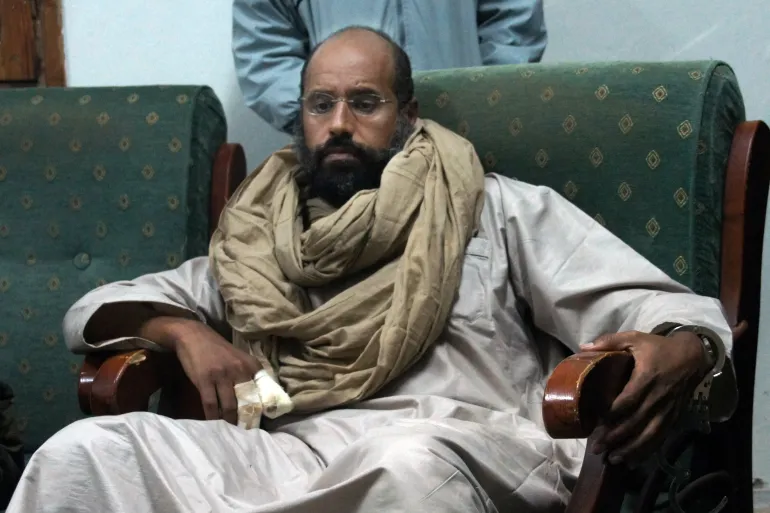
Zintan, Libya – Seif al-Islam Gadhafi, the son of former Libyan leader Moammar Gadhafi, has been killed in the town of Zintan, Libyan officials announced on Tuesday.
The circumstances surrounding his death have not yet been officially disclosed, though local media reports suggest he was killed by armed men at his home.
Reformist Face of the Gadhafi Regime
Born in June 1972, Seif al-Islam earned a PhD from the London School of Economics and was widely regarded as the reformist face of his father’s regime. During Moammar Gadhafi’s rule, he was often presented as a modernizer who could bridge Libya’s authoritarian past with potential reforms.
Legacy of Conflict
Moammar Gadhafi was toppled in a NATO-backed uprising in 2011 after more than four decades in power. He was killed later that year amid fighting that spiraled into a civil war.
Seif al-Islam was captured while attempting to flee to neighboring Niger but was released in June 2017. Since then, he had lived in Zintan, maintaining a low profile but remaining a controversial figure in Libya’s fractured political landscape.
Legal Battles and ICC Charges
In 2015, a Libyan court convicted Seif al-Islam in absentia of inciting violence and murdering protesters, sentencing him to death. He was also wanted by the International Criminal Court (ICC) on charges of crimes against humanity linked to the 2011 uprising.
His death marks the end of a turbulent chapter in Libya’s post-Gadhafi era, closing the book on one of the most prominent figures associated with the former regime.
Conclusion
Seif al-Islam Gadhafi’s killing underscores the lingering instability in Libya, where political divisions and armed groups continue to shape the country’s fragile future. His death removes a figure once seen as both a potential reformer and a symbol of the old order, leaving questions about Libya’s path forward in the aftermath of decades of conflict.