
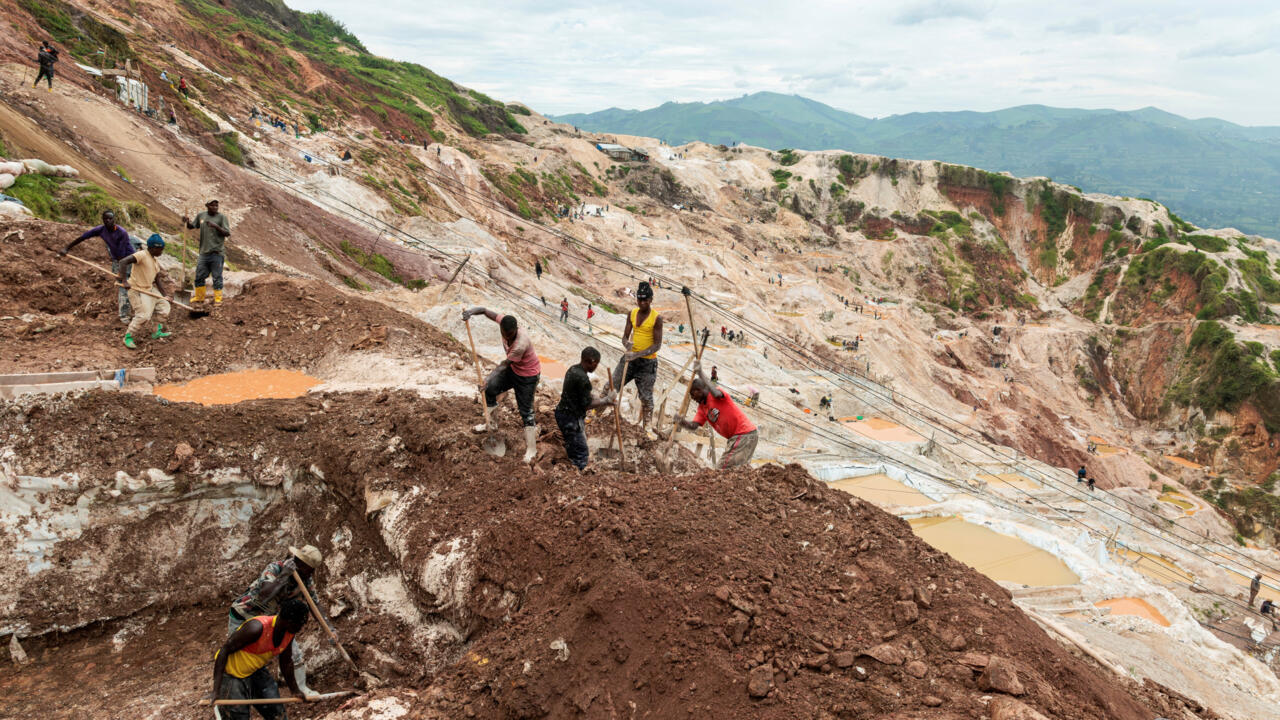
Kinshasa, DRC – The government of the Democratic Republic of Congo (DRC) has expressed fears that at least 200 people may have died following a massive landslide at the Rubaya coltan mine in North Kivu province, an area currently under the control of the M23 armed group.
The Tragedy
According to the country’s communications ministry, the landslide struck on Wednesday afternoon, with a second collapse occurring on Thursday morning. The mine, perched on steep hillsides carved by deep ravines, is notoriously unstable, especially during the rainy season.
Thousands of artisanal miners work daily in Rubaya’s pits, often equipped with little more than shovels and rubber boots. The precarious conditions made the landslide particularly devastating.
M23-appointed governor Eraston Bahati Musanga, who visited the site on Friday, told AFP there were “at least 200 deaths,” though the exact toll remains unverified. Phone networks have been down for several days, and information is arriving only “in dribs and drabs” via motorbike couriers, humanitarian sources said. Injured survivors have been taken to local health centres with limited resources.
Belgium’s embassy in Kinshasa expressed solidarity on X, mourning the victims of the tragedy.
Strategic Importance of Rubaya
The Rubaya mine is one of the world’s most significant sources of coltan, a mineral critical in the production of electronics such as laptops and mobile phones. It is estimated to produce 15 to 30 percent of global supply.
Since its resurgence in 2021, the M23 militia, with alleged support from Rwanda, has seized vast tracts of eastern DRC, capturing Rubaya in April 2024. United Nations experts report that the group has established a parallel administration to regulate mining operations, imposing a $7-per-kilogram tax on coltan production and sale. This system is believed to generate around $800,000 per month for the militia.
Accusations of Looting
Kinshasa has accused M23 and Rwanda of orchestrating an “organised system of looting” of the country’s mineral wealth. The government noted that all mining and commercial activity in Rubaya was officially banned in February 2025, yet between 112 and 125 tonnes of coltan continue to be extracted monthly and sent “exclusively to Rwanda.”
Rwanda denies providing military support to M23, but UN experts maintain the militia has been instrumental in siphoning off DRC’s mineral riches.
A Region in Crisis
Eastern DRC has endured three decades of continuous violence, with armed groups exploiting its vast natural resources. The Rubaya landslide highlights not only the human cost of unsafe mining practices but also the broader geopolitical struggle over control of the region’s mineral wealth.
Conclusion
As the DRC mourns the victims of the Rubaya landslide, the government has called on the international community to fully grasp the scale of the tragedy and address the underlying issues of armed occupation and resource exploitation. The disaster underscores the urgent need for stability, accountability, and humanitarian support in one of the world’s most resource-rich yet conflict-ridden regions.

