In a dazzling display of ancient grandeur, Egypt officially inaugurated the Grand Egyptian Museum (GEM) on Saturday with a breathtaking ceremony featuring drone light shows, orchestral performances, and pharaonic-themed spectacles. The event, held near the iconic Giza Pyramids and Sphinx, marked the long-awaited opening of one of the world’s most ambitious cultural projects a museum two decades in the making that promises to redefine how Egypt’s millennia-old heritage is experienced.
A Cultural Landmark 20 Years in the Making
The $1 billion museum now the largest in the world dedicated to a single ancient civilization represents the centerpiece of Egypt’s efforts to revive tourism and stimulate its struggling economy. Construction began in 2005 under former President Hosni Mubarak but faced repeated delays due to political unrest, economic challenges, and the 2011 Arab Spring revolution.
At the glittering ceremony, attended by European and Arab royals along with global dignitaries, President Abdel Fattah el-Sissi hailed the museum as a global hub for cultural exchange.
“Let this museum be a platform for dialogue, a destination for knowledge, a forum for humanity, and a beacon for all who cherish life and human civilization,” El-Sissi said.
A Modern Home for Egypt’s Ancient Treasures
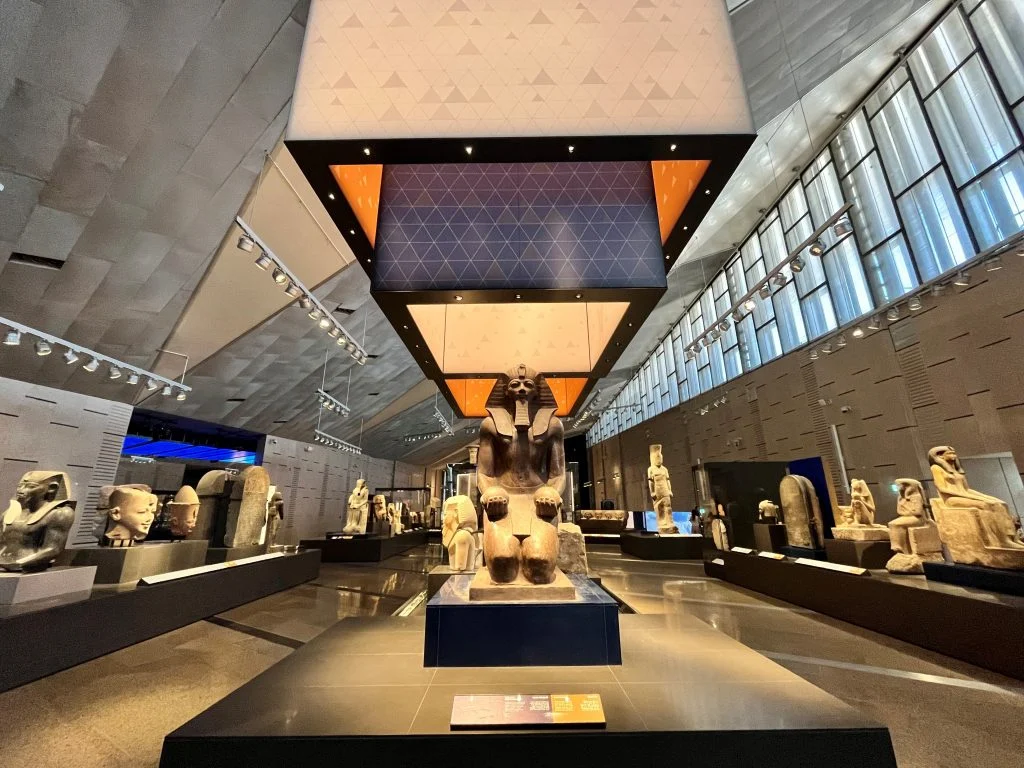
Situated just a few kilometers from the Giza Plateau, GEM combines modern architecture with symbolic design, featuring a towering glass façade that echoes the geometry of the pyramids. Inside, 50,000 artifacts are displayed across 24,000 square meters of exhibition space, enhanced by interactive digital and virtual reality experiences.
Greeting visitors in the museum’s grand atrium is a 13-meter-tall granite statue of Ramses the Great, one of ancient Egypt’s most celebrated pharaohs. The museum’s 12 galleries trace Egypt’s history from prehistoric times to the Roman era.
The highlight is the complete collection of King Tutankhamun’s artifacts more than 5,000 items showcased together for the first time since their discovery in 1922. The display includes the boy king’s golden throne, chariots, sarcophagus, and iconic burial mask, widely regarded as the museum’s crown jewel.
“Everyone has been waiting for this opening because of Tutankhamun,” said Egyptologist Zahi Hawass, emphasizing the collection’s global significance.
A Grand Opening Fit for the Pharaohs
The opening ceremony paid tribute to Egypt’s ancient majesty with hundreds of performers dressed in pharaonic attire and drone formations illuminating the night sky with images of gods like Isis and Osiris. Leaders and royals from more than 70 countries attended, echoing the historic 1869 opening of the Suez Canal, which similarly drew the world’s elite to Egypt.
Tourism and Economic Revival
Officials project that the Grand Egyptian Museum will attract five million visitors annually, placing it among the ranks of global institutions such as the Louvre, British Museum, and Metropolitan Museum of Art.
The museum’s opening coincides with a broader strategy to bolster Egypt’s tourism infrastructure including new highways, a nearby metro station, and the recently launched Sphinx International Airport, located just 40 minutes away.
In 2024, Egypt welcomed a record 15.7 million tourists, contributing roughly 8% of the nation’s GDP. Authorities now aim to reach 30 million visitors annually by 2032, a move expected to generate thousands of jobs and inject much-needed foreign currency into the economy.
“The Grand Egyptian Museum will transform Egypt’s tourism sector,” said tour guide Walid el-Batouty. “Every visitor from taking a cab to buying a bottle of water contributes to the nation’s economic revival.”
With the Grand Egyptian Museum now open, Egypt has not only created a monument to its past but also a beacon for its future where history, culture, and innovation converge to inspire generations to come.