
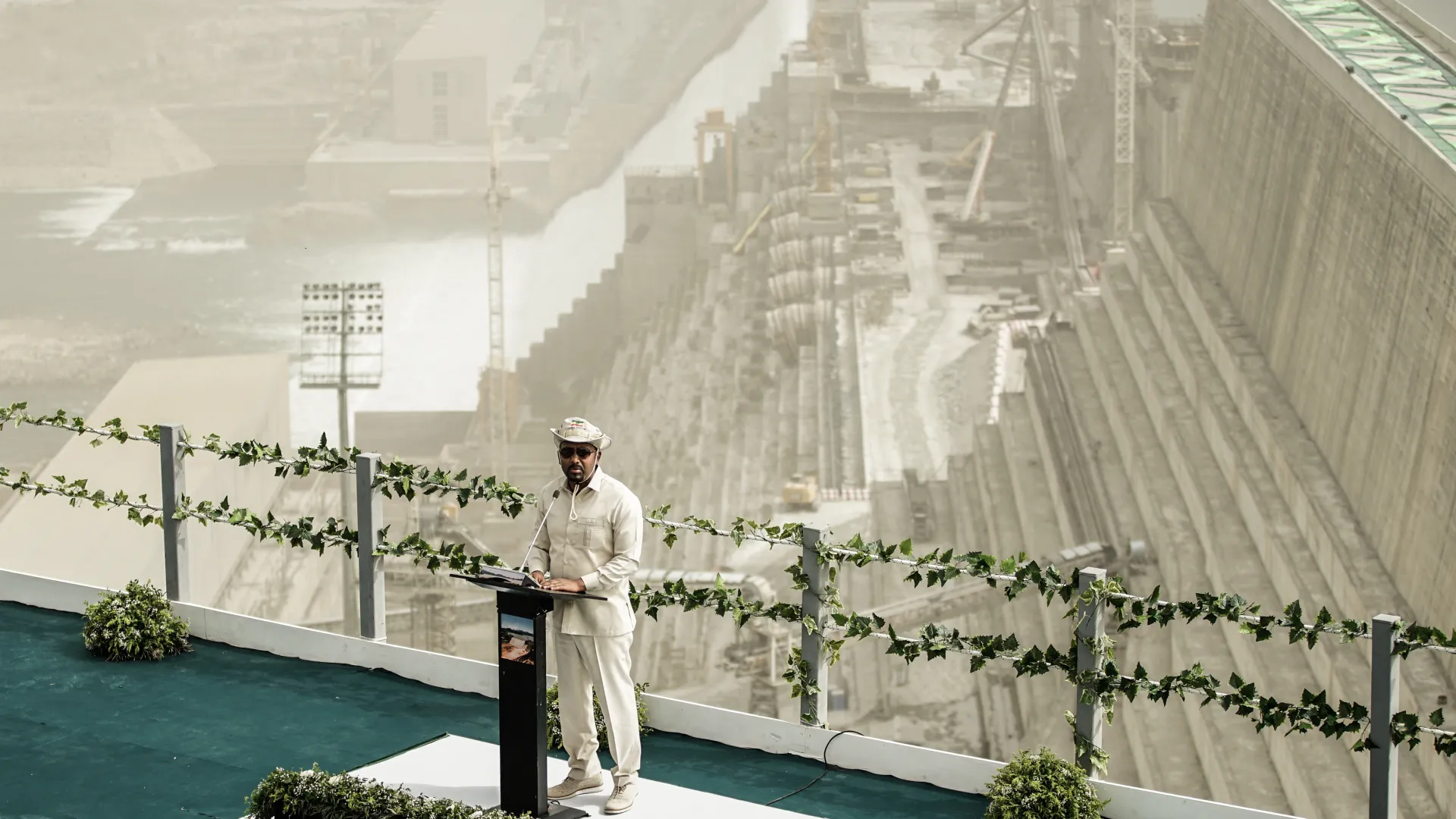
Addis Ababa, Ethiopia – Prime Minister Abiy Ahmed on Tuesday firmly denied claims by U.S. President Donald Trump that Ethiopia’s new mega-dam was financed by the United States.
The $4-billion Grand Ethiopian Renaissance Dam (GERD), which straddles a tributary of the River Nile, is set to generate 5,150 megawatts of electricity, making it the largest dam by power capacity in Africa.
Trump’s Claim in Davos
Speaking on the sidelines of the World Economic Forum in Davos last month, President Trump backed Egypt’s position that the dam poses an “existential threat” to its water supply. Egypt depends on the Nile for 97 percent of its water.
Trump asserted that the dam “was financed by the United States and it basically blocks the Nile.”
Abiy’s Pushback
Addressing parliamentarians in Addis Ababa, Prime Minister Abiy rejected the claim outright.
“We did not receive a single birr in loans or financial aid from any foreign sources for the construction of the mega-dam. We achieved this through the strong commitment of Ethiopians living in the country and in the diaspora,” Abiy said.
Construction of the GERD began in 2011 and was financed through taxes and loans from Ethiopians, both at home and abroad.
Project Financing and Purpose
The dam’s prime contractor, Webuild CEO Pietro Salini, confirmed that the project was entirely financed by Ethiopia.
“Not one international lender was willing to put money in this project,” Salini told AFP at the inauguration in September.
He added that the dam’s purpose is strictly energy generation:
“The dam releases water to produce energy. They are not irrigation schemes that consume water.”
Diplomatic Tensions
Egypt, a close ally of the U.S., continues to view the GERD as a threat to its water security. Trump pledged to “get negotiations back on track” between Cairo and Addis Ababa.
Egypt has said it is ready “to relaunch mediation efforts,” but Ethiopian authorities have yet to respond formally.
Conclusion
The GERD remains a flashpoint in regional and international diplomacy, pitting Ethiopia’s drive for energy independence against Egypt’s fears of water scarcity. As Abiy Ahmed insists the dam is a product of Ethiopian resilience and self-financing, the dispute underscores the delicate balance between development ambitions and transboundary resource politics along the Nile.

