
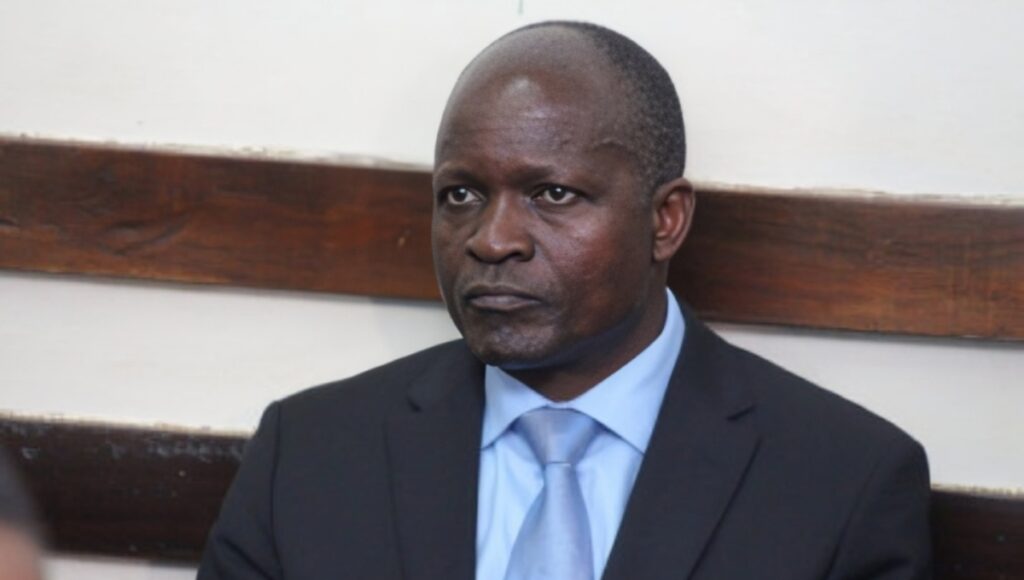
Former Migori Governor Zacharia Okoth Obado has urged the High Court to acquit him in the murder case of university student Sharon Beryl Otieno, arguing that the prosecution has failed to establish a direct link between him and her death.
Defence Submissions
In final submissions filed through Senior Counsel Kioko Kilukumi, Obado maintained that the case rests on suspicion arising from his intimate relationship with Sharon rather than concrete evidence.
“I did not kill Sharon,” his defence team told the court, stressing that suspicion, however strong, cannot substitute proof beyond a reasonable doubt.
Obado is charged alongside his former personal assistant Michael Juma Oyamo and former county clerk Caspal Ojwang Obiero. The trio faces murder charges over Sharon’s death. In January 2025, the court acquitted them of a second count relating to Sharon’s unborn child but placed them on their defence for the main charge.
Case Background
Sharon was killed on the night of September 3–4, 2018, and her body was later discovered near River Owade in Homa Bay County. A postmortem revealed she died from severe haemorrhage caused by penetrating force trauma, with evidence of manual strangulation. She was about 28 weeks pregnant at the time.
Obado admitted to having an intimate relationship with Sharon and acknowledged DNA results showing a 99.9% probability that he was the father of the unborn child. However, he insisted the affair was neither secret nor a motive for murder, noting that he had been financially supporting Sharon, including covering upkeep and medical expenses.
Defence Arguments
The defence argued that Sharon had abandoned plans to disclose their relationship to the media, negating any alleged motive. They also faulted investigators for narrowing their focus on Obado because of the pregnancy rather than exploring other leads.
Counsel cited threatening messages Sharon reportedly received from an unidentified woman, claiming this angle was not thoroughly investigated.
“The prosecution has merely painted the 1st accused with the colours of suspicion,” the defence submitted, adding that the evidence on record falls short of the threshold required to sustain a conviction.
Conclusion
As the High Court prepares to deliver its verdict, the case remains one of Kenya’s most high-profile trials, intertwining politics, personal relationships, and questions of justice. Obado’s defence underscores the principle that suspicion alone cannot secure a conviction, while the prosecution insists its evidence proves guilt beyond reasonable doubt.

