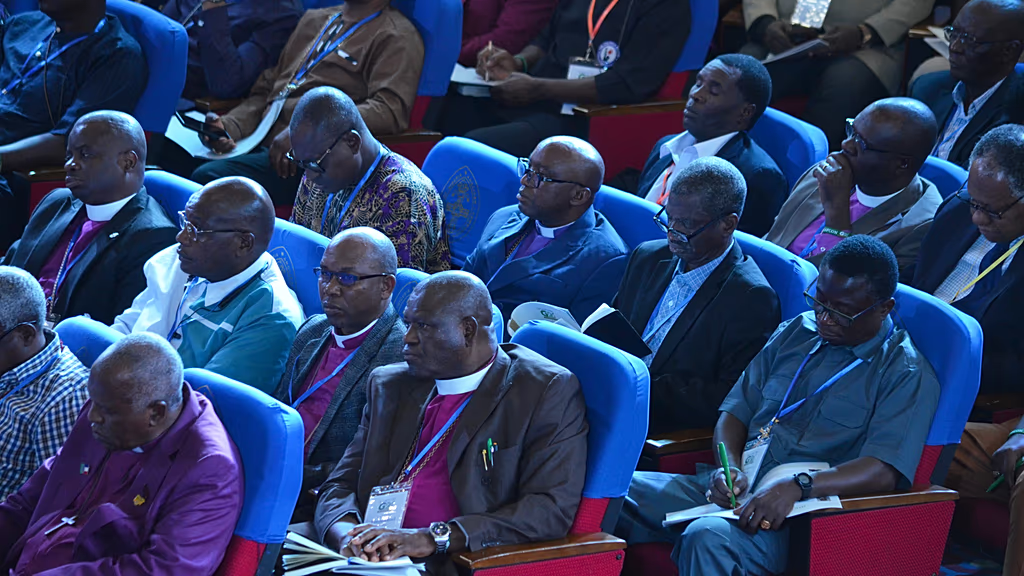
Conservative Anglican leaders from Africa, Asia, and Latin America convened in Nigeria on Wednesday for a high-level meeting that could influence the future direction of the global Anglican Communion, one of the largest Christian fellowships in the world.
The four-day conference is organized by the Global Fellowship of Confessing Anglicans (GAFCON), a coalition representing conservative Anglican provinces primarily from the Global South. Delegates are expected to deliberate on proposals that could reshape governance structures within the Anglican world and address growing disagreements on doctrinal issues.
Debate Follows Appointment of First Female Archbishop
The meeting comes shortly after the Church of England installed Sarah Mullally as the first woman to serve as Archbishop of Canterbury, the most senior spiritual office within Anglicanism.
While some conservative leaders have criticized the appointment on the basis of gender, much of the controversy revolves around Mullally’s stance on LGBTQ+ issues within the church.
Several Anglican leaders from conservative provinces argue that developments within parts of the Anglican world including discussions around same-sex marriage and the ordination of LGBTQ+ clergy diverge from traditional doctrinal positions.
GAFCON Rejects “Schism” Narrative
Officials from GAFCON have rejected claims that the movement represents a schism within Anglicanism.
Speaking ahead of the discussions, Justin Murff, Canon for Global Affairs to the GAFCON general secretary, said the fellowship should instead be viewed as a global orthodox Anglican body.
According to Murff, GAFCON believes it represents the majority of practicing Anglicans worldwide and aims to “reorder” the communion rather than break away from it.
Cultural and Legal Context in Africa
The debate also reflects deep cultural and legal differences across Anglican provinces. In many African countries, homosexuality remains socially taboo and is criminalized under existing laws.
For instance, Uganda passed legislation in 2023 introducing severe penalties for certain same-sex offenses, including the death penalty in some cases. Such laws and social attitudes have reinforced conservative theological positions within many African churches.
Global Anglican Demographics Shifting
The Anglican Communion traces its origins to the Reformation-era founding of the Church of England, blending elements of Protestant theology with Catholic-style liturgy and sacraments.
Over centuries, the tradition expanded globally through British colonial influence and missionary activity. Today, Anglicanism is particularly strong across Africa, where local churches have grown significantly under indigenous leadership.
According to the Anglican Communion Office, the Anglican Communion includes approximately 85 million members across 165 countries, organized into more than 40 autonomous provinces.
Push for Decentralization
Parallel to the debates within GAFCON, the wider Anglican Communion is considering structural reforms aimed at making the fellowship less centered around Canterbury in England.
These proposals acknowledge that the majority of Anglicans now live in the Global South, prompting calls for a governance model that better reflects the geographic and demographic realities of the modern church.
As discussions continue in Nigeria, observers say the outcome could significantly shape the balance of influence within global Anglicanism and determine how the communion navigates its growing theological and cultural divides.