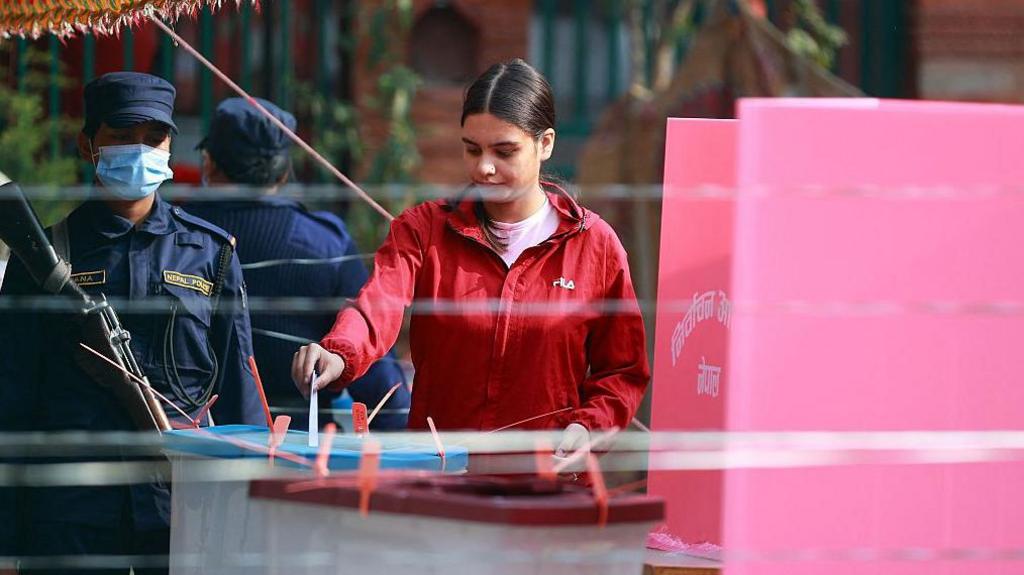
Millions of voters across Nepal cast their ballots in a pivotal general election on March 5, marking the country’s first nationwide vote since violent youth-led protests forced the collapse of the government last September.
The election comes at a critical moment for the Himalayan nation, where widespread anger over corruption, economic stagnation, and inequality sparked months of unrest that left 77 people dead, many of them protesters reportedly shot by police.
With nearly 19 million registered voters, including almost one million first-time voters, the election is widely viewed as a defining moment for Nepal’s political future.
A Contest Between Political Establishment and New Generation
The election pits long-established political figures against a new wave of leaders appealing to younger voters, particularly members of Generation Z, who were central to the protests that brought down the previous administration.
Among the leading candidates is former prime minister KP Sharma Oli, whose government was toppled during the demonstrations. Oli, leader of the Communist Party of Nepal (Unified Marxist–Leninist), has insisted that the protests were not a rejection of his leadership and says he remains confident of victory.
Another major contender is Balen Shah, a former rapper who stepped down as mayor of Kathmandu earlier this year to contest a parliamentary seat. Shah is representing the Rastriya Swatantra Party and has attracted strong support among younger voters seeking political change.
Key Issues: Corruption, Jobs, and Economic Opportunity
The election campaign has been dominated by concerns about corruption, unemployment, and economic stagnation.
Many young Nepalis say the country’s lack of job opportunities is forcing a growing number of citizens to leave in search of work abroad, contributing to what economists describe as a severe brain drain.
For voters such as Ispa Sapkota in Kathmandu, the election represents a chance to address those challenges.
“We want a better nation,” she said after casting her vote, adding that many young people struggle to find employment at home.
Established Parties Seek to Retain Power
Traditional political forces remain influential. The Nepali Congress, led by Gagan Thapa, has promised reforms aimed at improving governance and responding to the demands of younger voters.
However, critics say the country’s political establishment has repeatedly failed to address systemic problems.
Gen Z activist Rakshya Bam said she remains skeptical about whether the election will bring meaningful change, arguing that political parties have not fully incorporated the demands of the protest movement into their campaign platforms.
Logistical Challenges in Counting Votes
Nepal’s rugged terrain presents significant logistical challenges for the electoral process.
Ballots must be transported across mountainous regions before being counted manually. As a result, officials say the process could take several days.
The Election Commission of Nepal estimates voter turnout at around 60 percent and has pledged to begin releasing results next week. Counting for the 165 first-past-the-post seats in the 275-member House of Representatives will begin once ballot boxes reach counting centers.
The remaining 110 seats will be allocated through a proportional representation system, based on the overall vote share received by political parties.
A Defining Moment for Nepal’s Political Future
If newer political forces such as the Rastriya Swatantra Party perform strongly, analysts say it could signal a dramatic shift away from the coalition politics that has dominated Nepal for more than three decades.
For many voters, the election represents more than just a political contest it is a test of whether the energy of last year’s protests can translate into lasting reform.
As voter Samikshya KC put it after casting her ballot: “Nepal is becoming very corrupt. I’m hoping for a big change.”