
More than 200 Venezuelan political prisoners began a hunger strike Sunday to demand their release under a new amnesty law that excludes many of them.
Protest at Rodeo I Prison
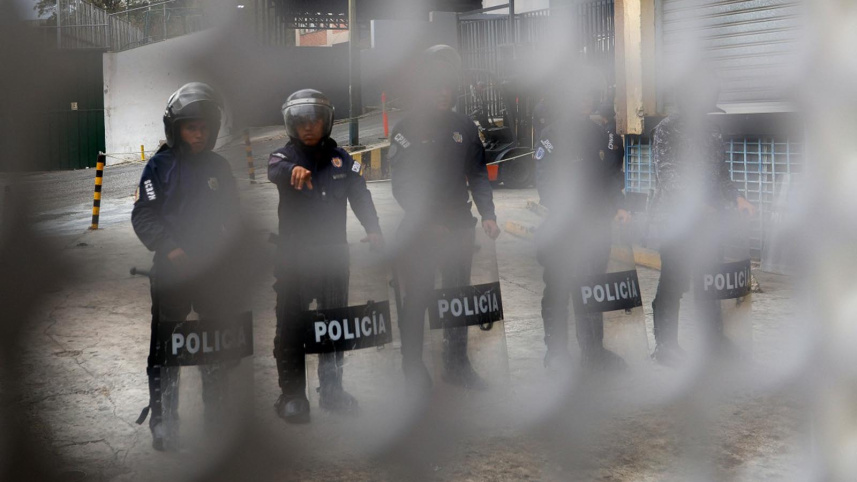
At Rodeo I prison, located about 40 kilometers east of Caracas, inmates shouted slogans such as “Freedom!” and “Release us all!” as relatives gathered outside. The protest began Friday night after prisoners learned they would not benefit from the law, which excludes cases involving the military the most common category at the facility.
Family members confirmed that approximately 214 inmates, including Venezuelans and foreigners, are participating. Among them is Nahuel Agustin Gallo, an Argentine police officer accused of terrorism, another category excluded from the law.
Red Cross Visit
On Sunday, a team from the International Committee of the Red Cross (ICRC) visited Rodeo I for the first time. Filippo Gatti, the ICRC’s health coordinator for Venezuela, told families:
“It’s a first step, and I think we’re on the right track.”
Amnesty Law Criticized
The amnesty law, approved Thursday by Venezuela’s congress, was introduced by interim leader Delcy Rodriguez under pressure from Washington after US commandos captured former president Nicolás Maduro on January 3.
Critics argue the legislation contains carve-outs that exclude many political prisoners, particularly those accused of terrorism or linked to the military. While the law extends to 11,000 political prisoners who were previously paroled or placed under house arrest, more than 1,500 detainees have already applied for amnesty since its passage.
Releases Amid Hunger Strike
Despite the exclusions, some prisoners were released Sunday from Rodeo I, greeted with applause from relatives. Robin Colina, one of the freed inmates, exclaimed:
“I’m out, I love you so much, my queen! I’m doing well.”
Another released prisoner, Armando Fusil, a police commissioner from Maracaibo, described the solidarity among detainees as a “beautiful brotherhood.” The NGO Foro Penal reported 23 releases on Sunday.
Background
Maduro, who ruled Venezuela from 2013 until January 2026, is currently in US custody facing drug trafficking charges. He has pleaded not guilty, declaring himself a “prisoner of war.”
Conclusion
The hunger strike at Rodeo I underscores the deep divisions over Venezuela’s new amnesty law. While some detainees have been freed, hundreds remain excluded, fueling frustration and highlighting the challenges of reconciliation in a country emerging from years of authoritarian rule.

