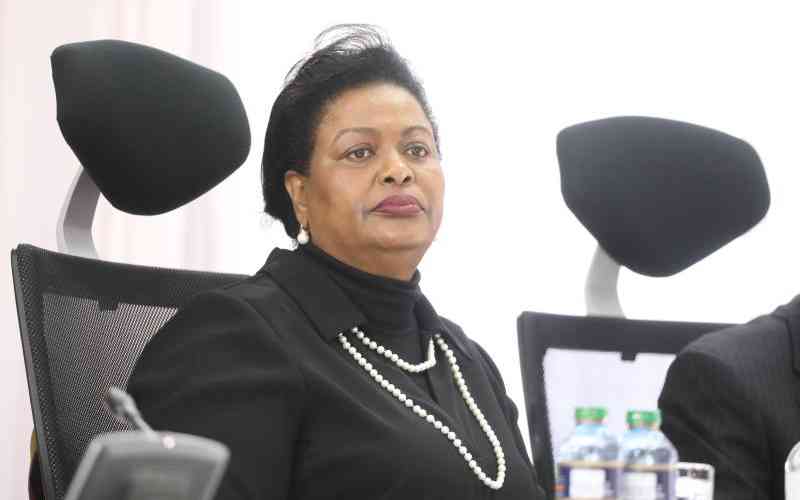
Kenya has nominated Njoki Ndung’u, a judge of the Supreme Court of Kenya, for election as a judge of the International Criminal Court (ICC), a move that could mark a significant milestone for the country’s judiciary on the global stage.
If elected, Justice Ndung’u would become the second Kenyan to serve on the ICC bench after Joyce Aluoch, who served at the court in The Hague from 2009 to 2018.
Global competition for ICC seats
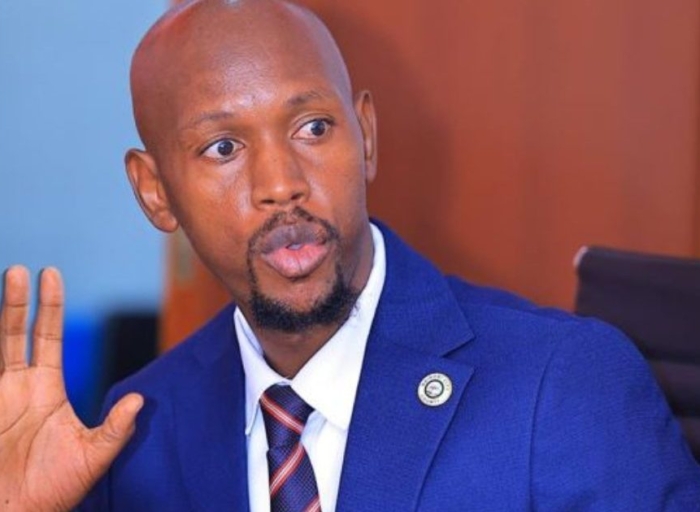
According to the ICC’s official nominations, Justice Ndung’u is among seven candidates from different regions seeking election to the court. The other nominees include Evelyn Ankumah of Ghana, Guénaël Mettraux of Switzerland, Rosette Muzigo-Morrison of Uganda, Deo John Nangela of Tanzania, Diana Carolina Olarte Bacares of Colombia, and Yoshimitsu Yamauchi of Japan.
The elections are scheduled to take place in December in New York City during the 25th session of the Assembly of States Parties to the ICC.
Qualification under criminal law category
Under ICC rules established at The Hague, candidates are nominated under two categories. List A includes candidates with recognized expertise in criminal law and criminal procedure, while List B covers specialists in international law.
Justice Ndung’u has been nominated under List A, reflecting her experience and qualifications in criminal law and judicial practice.
“Judge Njoki Susanna Ndungu is the candidate of the Republic of Kenya for election of a Judge of the International Criminal Court,” reads part of her official statement of qualifications on the ICC website.
“She is nominated for inclusion in List A, relating to candidates with qualifications in criminal law and procedure and the necessary relevant experience… in criminal proceedings.”
Career in law and public service
Throughout her career, Justice Ndung’u has played a prominent role in shaping Kenya’s legal and policy frameworks through landmark judicial decisions and legislative initiatives.
Her jurisprudence has contributed to the development of a victim-centred and constitutionally grounded criminal justice system in Kenya.
Before joining the bench, she served as a State Counsel in the Office of the Attorney General, where she handled prosecutions involving serious criminal offences, including capital crimes.
In 2003, Ndung’u was appointed a nominated Member of Parliament in Kenya, a position she held for four years. She also served as a member of the Pan-African Parliament between 2004 and 2007.
During her parliamentary tenure, she championed several legislative initiatives, most notably the Sexual Offences Act (Kenya), which significantly strengthened legal protections against sexual violence.
Role in constitutional reform
Justice Ndung’u also played a key role in Kenya’s constitutional transformation. In 2009, she was appointed to the Committee of Experts on Constitutional Review, which was tasked with drafting reforms that ultimately shaped the country’s Constitution of Kenya (2010) and aligned it with international legal standards, including those under the Rome Statute of the International Criminal Court.
She later joined the Supreme Court in 2011, becoming part of the apex judicial body with final appellate jurisdiction over all legal matters in the country, including criminal cases.
If elected in December, Justice Ndung’u would further strengthen Kenya’s presence in international judicial institutions and contribute to the ICC’s mandate of prosecuting genocide, crimes against humanity, war crimes, and the crime of aggression.