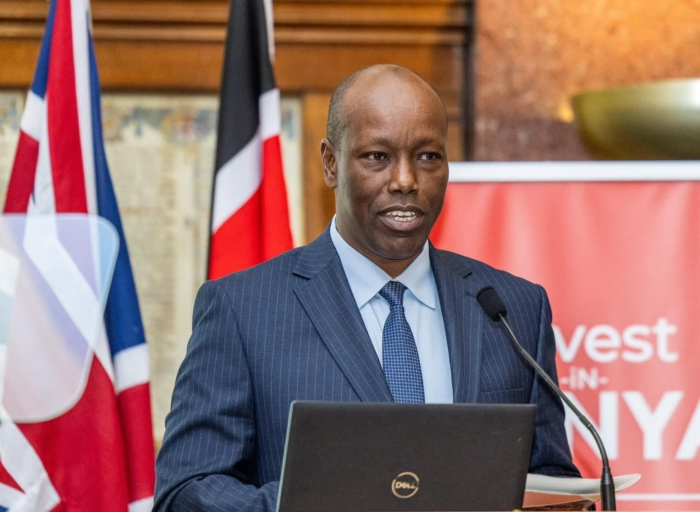
Mombasa, Kenya – Kenya Ports Authority (KPA) Managing Director Capt. William K. Ruto has dispelled claims that the government intends to privatize the Ports of Mombasa and Lamu, emphasizing that ongoing reforms focus on attracting private investment rather than transferring ownership.
Speaking on the government podcast Sema Na Spox – Bonga Na Gava, Capt. Ruto explained that the government will retain ownership of port land and infrastructure while leasing certain operations to private sector operators under structured agreements.
“KPA has conducted feasibility studies on its port assets to determine their value and identify areas where private sector participation can support infrastructure expansion and operational efficiency,” said Capt. Ruto.
Under the landlord port model, private operators would manage specific port operations, allowing for enhanced performance, infrastructure expansion, and increased cargo throughput, while all port assets remain under government ownership.
Container Traffic Growth Pressures Mombasa Port
Capt. Ruto noted that the Port of Mombasa is experiencing rising pressure due to increased container traffic. Container volumes have grown from 1 million Twenty-foot Equivalent Units (TEUs) in 2014 to 2.1 million TEUs in 2025.
“Performance accelerated after 2023, when volumes rose to 1.6 million TEUs, representing an 11.6 per cent growth. By 2024, the port surpassed the 2 million TEU mark, adding about 600,000 TEUs within two years,” he said.
The port’s current capacity is approximately 2.2 million TEUs, leaving limited room for additional growth. Despite this, regional transit demand remains robust, reinforcing Mombasa’s status as a key gateway to East and Central Africa.
Lamu Port Begins Receiving Growing Vessel Traffic
Capt. Ruto also highlighted progress at the Port of Lamu, which was completed in 2021 and has begun attracting a growing number of vessels following intensified marketing efforts.
Digital Transformation and Operational Efficiency
On operations, Capt. Ruto noted that Mombasa Port has fully automated services, eliminated manual payments, and reduced physical interactions.
“All payments for port services are now processed through digital platforms such as eCitizen and bank transfers, with international shipping lines wiring payments directly from overseas,” he said.
The KPA chief emphasized that these measures aim to improve efficiency, reduce congestion, and strengthen Kenya’s position as a major maritime hub in the region.