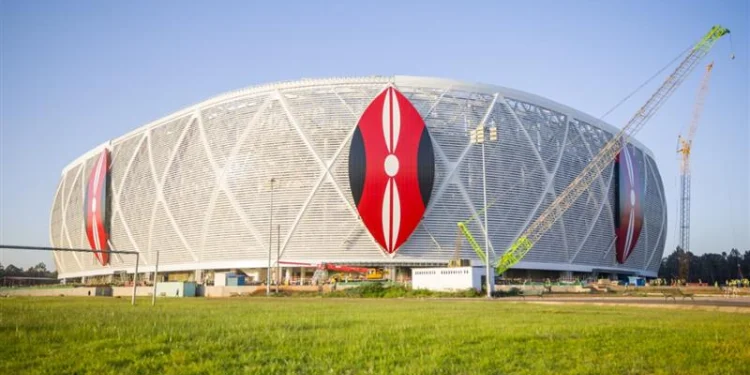
Kenya faces a significant risk of losing its rights to co-host the 2027 Africa Cup of Nations (AFCON) due to delays in remitting a mandatory hosting fee of Ksh3.9 billion ($30 million) to the Confederation of African Football (CAF).
Appearing before the National Assembly Committee on Sports and Culture chaired by Dan Wanyama, Sports Principal Secretary Elijah Mwangi warned that Kenya must settle the fee by March 30, 2026, or risk jeopardising its role in the ‘East Africa Pamoja’ co-hosting arrangement alongside Uganda and Tanzania.
Mwangi noted that both partner states have already fulfilled their financial obligations, leaving Kenya as the only country yet to make payment.
“We have been given up to 30th of March to clear the payment of the hosting fees… our ‘Pamoja’ countries of Uganda and Tanzania have paid but Kenya is yet to pay its share of about 3.9 billion,” he told MPs.
He cautioned that failure to meet the deadline could damage Kenya’s credibility and undermine progress already made in preparation for the continental tournament.
Stadium Projects Facing Delays
In addition to financial constraints, Kenya is also grappling with delays in upgrading key sporting infrastructure. Mwangi revealed that both Moi International Sports Centre Kasarani and Nyayo National Stadium may not meet CAF’s six-month readiness deadline.
At Kasarani, the government owes the contractor more than Ksh3.7 billion, forcing a reduction in workforce and slowing construction progress. Meanwhile, the contractor handling Nyayo Stadium has reportedly vacated the site due to unpaid dues exceeding Ksh2.6 billion, leaving the project stalled.
“We feel that we may not be ready within six months… the contractor has already vacated the site. Therefore, we have nothing to show,” Mwangi said.
Budget Constraints and Parliamentary Concerns
The challenges come shortly after the parliamentary committee rejected a proposal by the Sports Ministry to increase the AFCON budget allocation from Ksh3.5 billion to Ksh5 billion, citing insufficient justification.
Although lawmakers acknowledged the importance of the tournament, they maintained that Kenya’s financial commitment should reflect the shared nature of the co-hosting arrangement. The committee, however, pledged to support engagements with the National Treasury to secure the required funds.
According to the Budget Policy Statement, the Sports Department has a proposed ceiling of Ksh25.49 billion for the 2026/27 financial year, including Ksh7.38 billion for recurrent expenditure and Ksh18.11 billion for development.
Uncertain Outlook
The mounting financial and infrastructural hurdles place Kenya’s AFCON 2027 ambitions under increasing scrutiny. With the deadline fast approaching, the government faces urgent pressure to secure funding, complete stadium works, and demonstrate commitment to CAF to retain its role as a co-host.