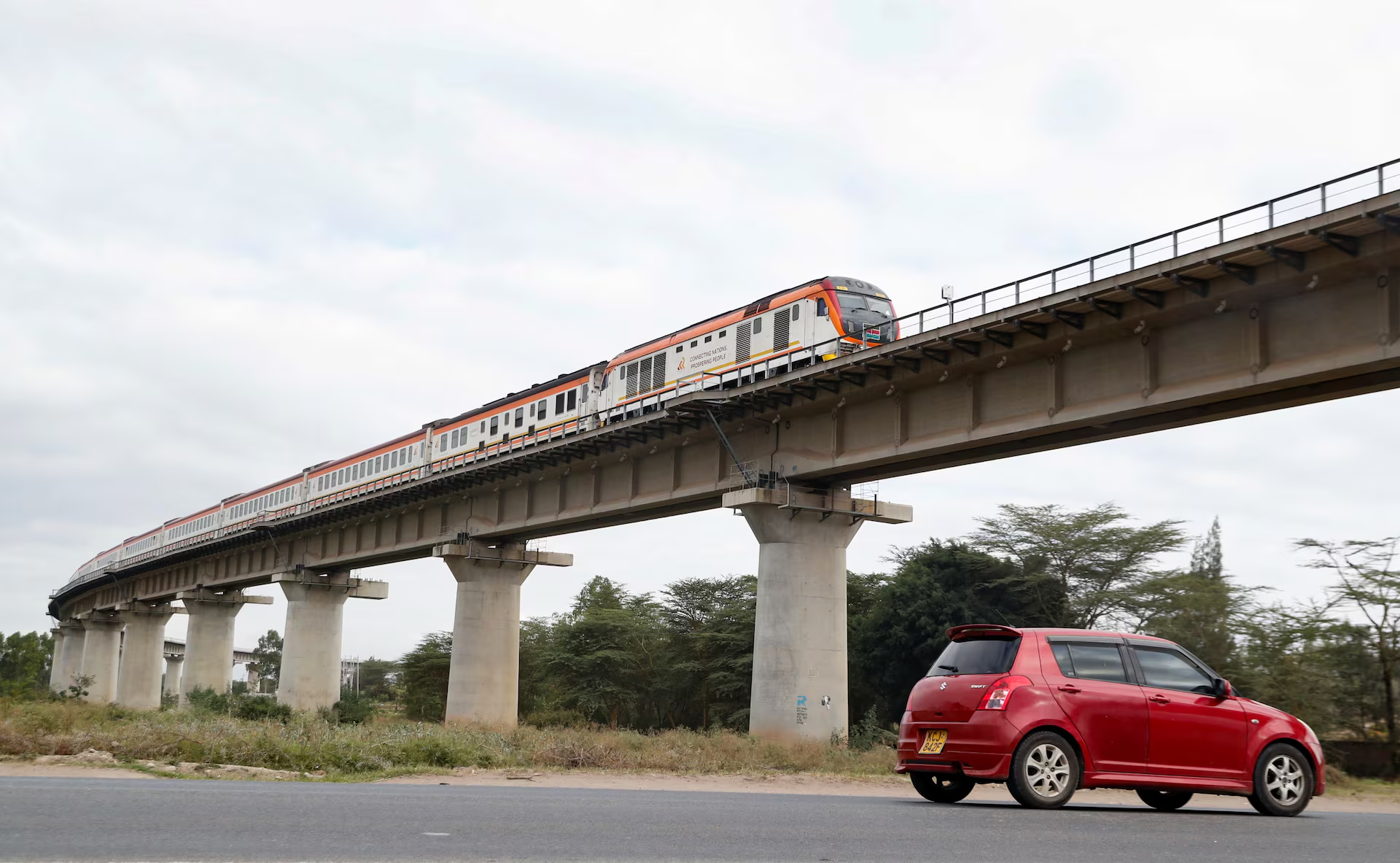
Kenya is set to restart construction of its long-delayed Standard Gauge Railway (SGR) extension on Thursday, marking a major shift in infrastructure financing after years of stalled progress.
The project, which aims to extend the railway from Naivasha towards the Ugandan border, had been suspended for more than six years after initial funding from China declined under changing priorities within the Belt and Road Initiative. The first phase of the railway, linking Mombasa to Nairobi, was completed in 2017.
President William Ruto is expected to officially launch the renewed construction at a ceremony near Naivasha, signalling a renewed push to enhance regional connectivity and trade across East Africa.
Shift to Revenue Securitisation
The revival of the multi-billion-shilling project is being driven by a new financing model based on revenue securitisation. The government has amended legislation to allow the use of proceeds from the Railway Development Levy charged on cargo transported via the existing SGR line as seed capital for the extension. The levy is estimated to generate approximately Ksh.35 billion ($270 million).
This approach reflects a broader fiscal strategy by the government to fund infrastructure projects without increasing external borrowing, amid mounting debt pressures and limited space for new taxation measures.
Continued Chinese Involvement
Despite the financing shift, Chinese participation remains significant. State-owned China Road and Bridge Corporation will serve as a contractor for the extension, according to Kenya Railways.
The project follows a 2024 agreement between African leaders and China to pivot from debt-heavy financing toward investment-led partnerships. Analysts say the move is designed to address concerns about debt sustainability while maintaining infrastructure development momentum.
Nairobi-based international relations expert Peter Kagwanja noted that the revised approach reflects a recalibration of China-Africa relations. He said the new framework prioritises sustainable investment models over large sovereign loans, particularly following criticism of so-called “debt trap diplomacy” a claim consistently rejected by Beijing.
Broader Economic Context
China significantly reduced lending to African countries from 2019, citing growing concerns over debt sustainability. However, at a 2024 summit in Beijing, it pledged $50 billion in credit and investments over three years, signalling renewed engagement under revised terms.
Kenya has already begun implementing this model in other projects, including a $1.5 billion highway expansion involving Chinese firms.
For the Ruto administration, the securitisation model offers a critical lifeline. With debt servicing consuming a substantial share of government revenue and public resistance to tax increases following the 2024 protests the government is increasingly turning to alternative financing mechanisms to sustain development.
Strategic Importance of the SGR Extension
The completion of the SGR line to the Ugandan border is considered vital for regional integration, facilitating faster and more efficient movement of goods from the Port of Mombasa into the East African hinterland.
Delays in the extension had left the railway terminating at Naivasha, more than 350 kilometres short of its intended endpoint, limiting its economic potential and cross-border impact.
The relaunch of construction is therefore expected to reinvigorate trade logistics and strengthen Kenya’s position as a regional transport hub.