
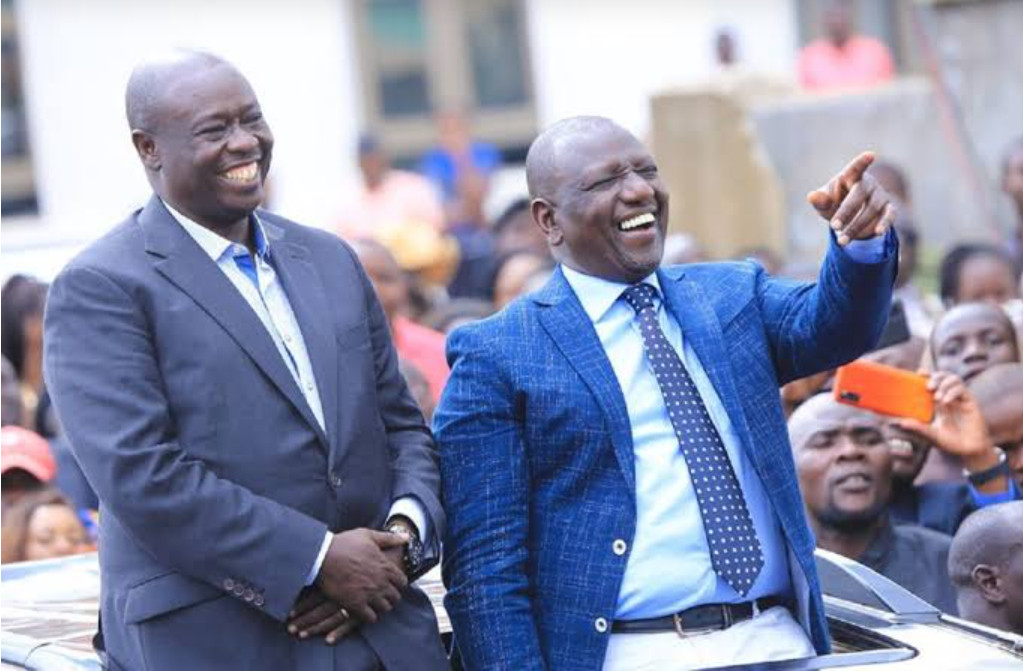
Kenya’s race for the “House on the Hill” has taken a decidedly personal and at times comical turn as President William Ruto and his former deputy, Rigathi Gachagua, engage in public attacks targeting each other’s physical appearances.
Traditionally, political campaigns have focused on policies, governance, and vision. However, the two leaders, now among Kenya’s most prominent political adversaries, appear to have shifted their messaging to a form of bare-knuckle rivalry, mocking each other’s body physiques in ways that have provoked laughter and raised eyebrows.
The exchange began when Gachagua, speaking at a United Opposition event in Kiambu, elicited laughter by pointing out what he described as Ruto’s significant weight loss.
“How much is enough, Mr Ruto? Just how much is enough? Unataka pesa ngapi? Lakini uzuri hata akiwa na hio pesa yote halali. Si mmeona amekonda mpaka maskio imekuja juu?” he said to roaring applause.
Within 24 hours, President Ruto responded, targeting the Opposition leaders’ own physical appearance while advising them on diet and exercise. “Go check yourselves in the mirror. Check how you look. Your head is swollen, and your tummy is almost ripping the shirt apart. Tafuteni gym kwanza muende mfanye exercise kidogo. Na mpunguze kukula chakula mingi, ndio muwache kulala kwa mkutano, ata mnaharibu hewa mkiwa mmelala…” he said, further asserting his readiness to engage on personal grounds.
Ruto, however, emphasized that the majority of his focus remains on governance.
“If you want us to go down that road, I’m ready for you. 1% of my time, I’ll deal with you… 99% of my time, I will serve the people of Kenya,” he stated.
The unfolding feud highlights the increasing role of personality politics in Kenya. While charisma has always been a campaign asset, this latest exchange demonstrates a trend where physical attributes and personal demeanor are not only fair game but have become central points of attack.
Political analysts note that such strategies aim to shift the discourse from policy to personal dominance, leveraging humor and social media virality to dehumanize opponents and influence public perception.
Globally, attacking a rival’s appearance is recognized as a classic logical fallacy, often criticized for distracting voters from substantive issues. The Obama campaign in 2016 famously countered similar attacks with Michelle Obama’s motto: “When they go low, we go high.” In Kenya, however, the current political climate suggests that going “high” is rarely the chosen path; instead, the campaign increasingly rewards those willing to engage in public mockery and offensive banter.
As the presidential contest intensifies, voters are left to weigh policy agendas against the spectacle of personal attacks a dynamic that could shape not only public discourse but also the tone of Kenyan politics for years to come.

