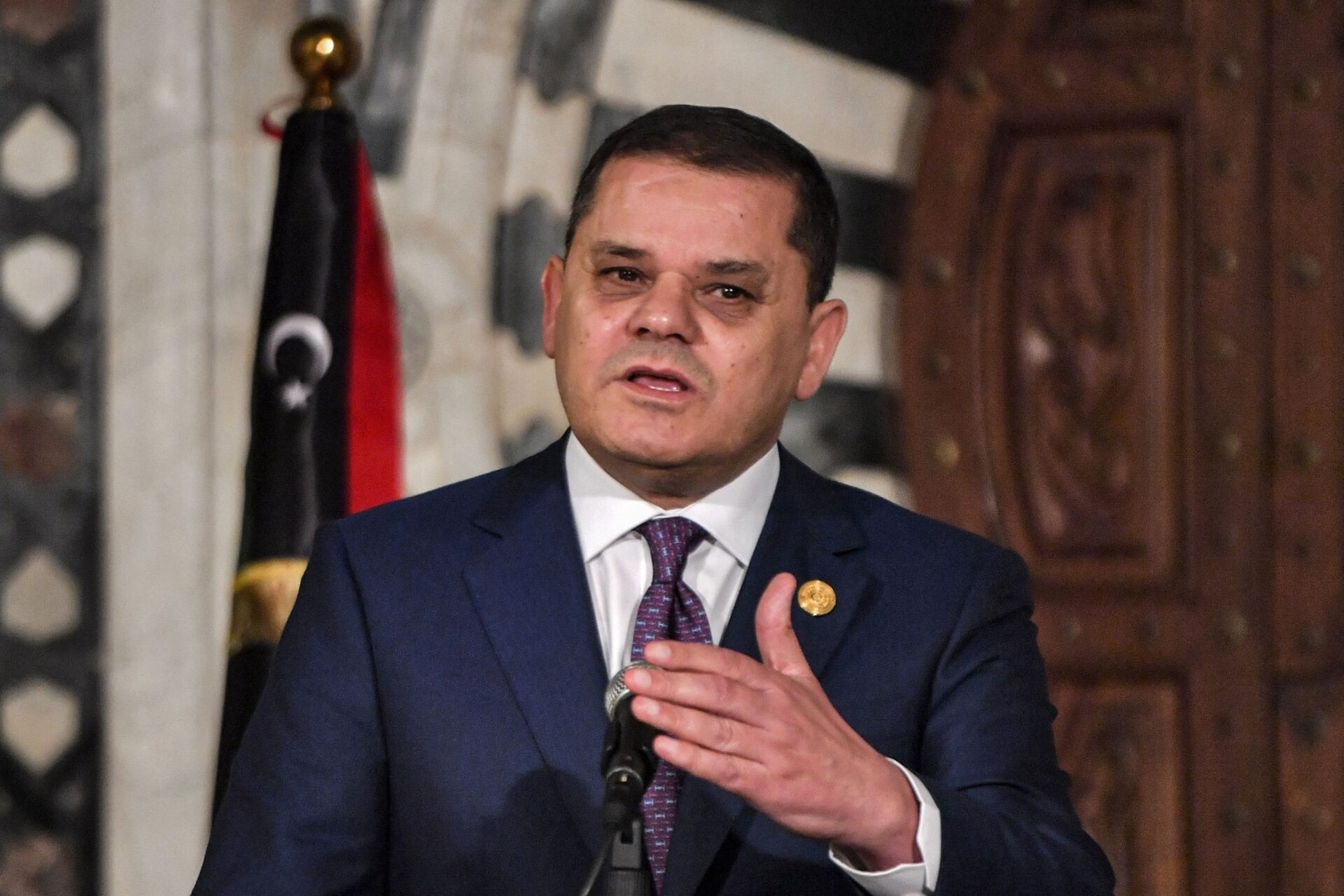
Libyan Prime Minister Abdulhamid Dbeibah has reshuffled his UN-backed government, announcing changes to the cabinet aimed at improving administrative performance and addressing political tensions within the country’s divided leadership.
The reshuffle, announced Thursday, saw around 10 ministers replaced in the 27-member cabinet, as the government seeks to strengthen its capacity to deliver services and navigate ongoing regional and political divisions.
Despite the changes, Dbeibah will retain control of the defence and foreign affairs portfolios, maintaining direct oversight of two of the government’s most critical ministries.
“The goal is not change for its own sake, but to accelerate the delivery of services to citizens,” Dbeibah said in a statement shared on social media.
Attempt to ease regional tensions
The cabinet changes appear designed in part to address political tensions among Libya’s leadership institutions and regional factions.
Relations between Dbeibah and senior political figures, including Mohamed al-Menfi, head of the Presidential Council of Libya, and Mohamed Takala, leader of the High State Council of Libya, had reportedly become strained over the distribution of key government positions among the country’s western, eastern, and southern regions.
Both Menfi and Takala attended the first cabinet meeting of the year following the reshuffle, a move viewed by observers as a sign of possible efforts to restore cooperation between Libya’s major political institutions.
A country still divided
Libya has struggled to achieve lasting stability since the Muammar Gaddafi regime collapsed during the Libyan Civil War (2011).
Today, the North African nation effectively operates under two rival administrations. The internationally recognised government led by Dbeibah is based in Tripoli, while a parallel administration aligned with eastern forces operates from Benghazi under military commander Khalifa Haftar.
The continued political fragmentation has complicated efforts to organise national elections and unify state institutions.
Limited female representation
The new cabinet also highlights ongoing concerns about gender representation in Libyan politics. Only one woman, Randa Ghareb, holds a ministerial position, serving as minister responsible for women’s affairs.
According to the government’s Hakomitna Government Platform, the reshuffle is intended to improve the overall efficiency of the administration and accelerate service delivery to Libyan citizens.
However, analysts note that the effectiveness of the new cabinet will depend largely on whether it can operate amid Libya’s ongoing political divisions and security challenges.