
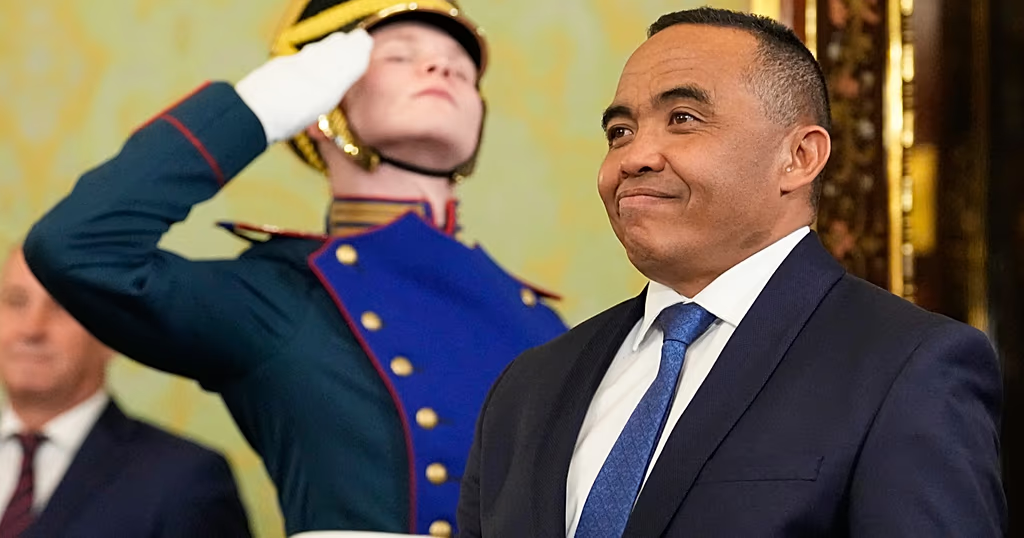
Residents of Madagascar have reacted cautiously after junta leader Michael Randrianirina dissolved the country’s council of ministers on Monday, a move that abruptly dismissed the government led by Prime Minister Herintsalama Rajaonarivelo.
The decision comes amid ongoing political tension following months of public frustration, particularly among young people who say the previous administration failed to deliver meaningful reforms.
Rising Discontent Among Youth
Much of the discontent traces back to demonstrations that erupted in September last year, sparked by persistent shortages of water and electricity. What began as protests over basic services quickly evolved into a broader movement demanding political and economic change.
The government attempted to quell the unrest through a crackdown that left several people dead and others injured, further intensifying public anger and galvanizing youth-led activism across the country.
Activists argued that the administration under Rajaonarivelo did not adequately address the grievances raised by protesters, especially calls for improved governance and better living conditions.
Controversy Over Cabinet Choices
Colonel Randrianirina’s earlier cabinet selections had already generated criticism. Several appointments included prominent figures from Madagascar’s historically turbulent political establishment, raising doubts among reform advocates about whether the transitional government would genuinely pursue the sweeping changes demanded by protesters.
Despite those concerns, some civil society groups initially hoped dialogue with the government might produce gradual reforms.
Surprise Announcement
The sudden dismissal of the cabinet nevertheless caught many observers off guard.
“It’s true that we didn’t like the choice of prime minister at first, but they showed an openness that made us think we could move forward,” said Elliot Randriamandrato, spokesperson for the youth-led “Gen Z” collective.
According to Randriamandrato, a cabinet reshuffle had not appeared necessary at this stage. However, he said the political reset could present an opportunity to appoint officials who better reflect the demands of last year’s protest movement.
Concerns Over Militarisation
The youth group also expressed concern over what it described as growing signs of militarisation within the transitional administration.
Randriamandrato pointed to the recent release of a political transition roadmap that was drafted without consultation with youth groups or protest leaders.
“There are faint signs that perhaps we are drifting towards something that does not follow the demands of the protests,” he warned.
Uncertain Political Path Ahead
Madagascar now faces renewed uncertainty as the junta considers forming a new cabinet while navigating pressure from activists demanding structural reforms and greater public participation in the transition process.
Political analysts say the coming weeks will be crucial in determining whether the leadership’s latest move signals genuine openness to change or merely a reshuffling of power within the existing political elite.

