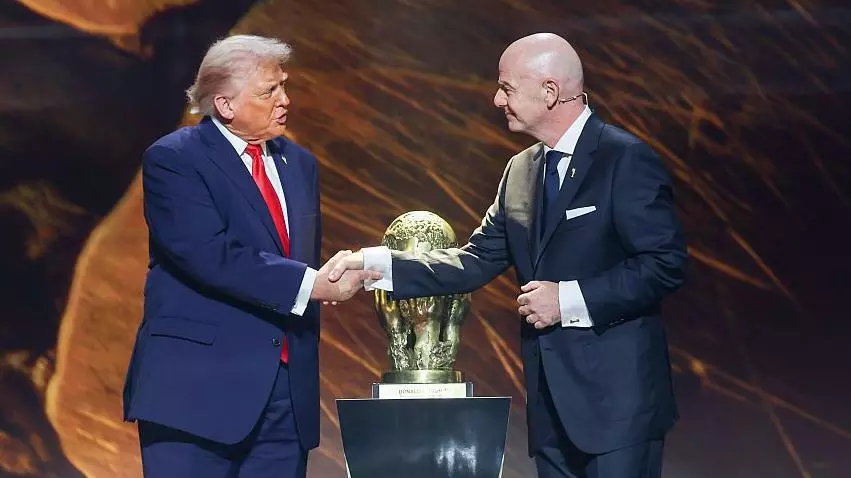
Washington — Donald Trump has stated that Iran will be allowed to participate in the upcoming FIFA World Cup, even as geopolitical tensions in the Middle East remain high.
The tournament, scheduled for 2026, will be jointly hosted by the United States, Canada, and Mexico. Concerns had emerged about Iran’s participation following the escalation of conflict involving Iran, Israel, and the United States in late February.
According to Gianni Infantino, president of FIFA, the matter was discussed during a meeting with Trump regarding preparations for the global football tournament.
In a message shared on Instagram, Infantino said the U.S. president confirmed that the Iranian national team would be “of course welcome” to compete in the competition.
Participation Questions Amid Conflict
Iran’s involvement in the tournament had come under scrutiny due to the intensifying regional conflict and potential diplomatic complications for teams entering the United States. Despite these concerns, Iran is currently scheduled to play its three group-stage matches in the U.S., including fixtures planned in Los Angeles and Seattle.
However, uncertainty remains. Officials from Iran’s football federation have reportedly raised concerns about the safety and political implications of sending the national team to compete in the United States while tensions between the countries persist.
Additional Controversies
The situation has been further complicated by developments involving Iran’s women’s national team. During the AFC Women’s Asian Cup held in Australia, several members of the Iranian squad reportedly sought asylum abroad. The move came after backlash in Iran when some players declined to sing the national anthem before a match, an act interpreted by critics at home as a political protest.
Looking Ahead to 2026
The 2026 World Cup will be the largest in the tournament’s history, featuring 48 national teams and matches staged across multiple cities in North America. As preparations continue, organizers and governments involved are expected to address political and security challenges that could affect participating teams.
Despite the geopolitical tensions, FIFA officials maintain that the tournament will remain open to all qualified teams, emphasizing football’s role as a global sport intended to bring nations together.