
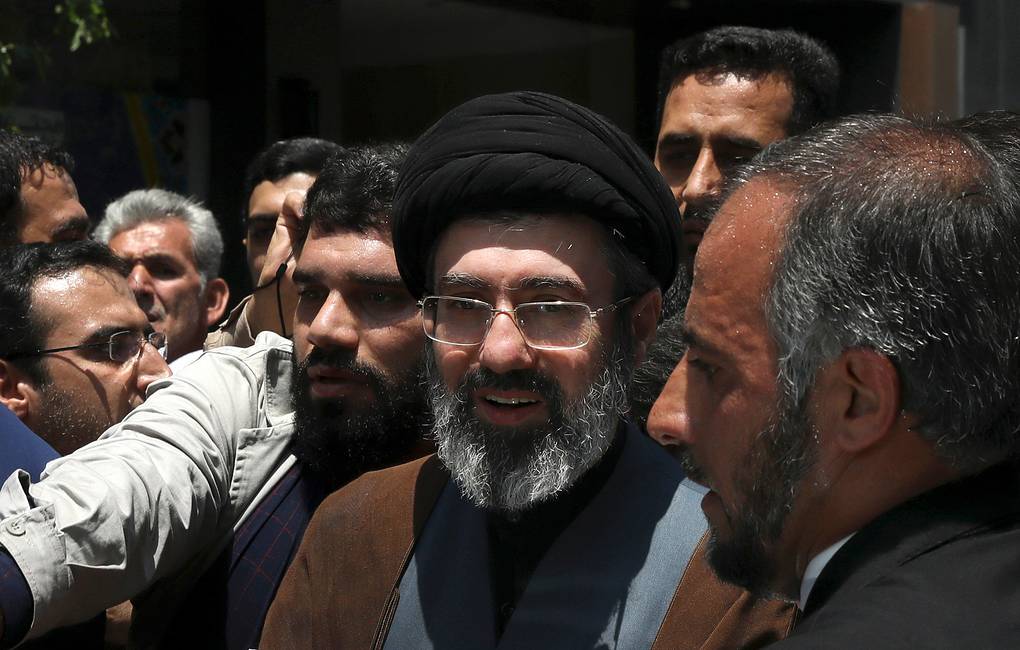
The son of Iran’s late Supreme Leader Ayatollah Ali Khamenei, Mojtaba Khamenei, is emerging as a potential contender for the country’s top leadership post following last week’s Israeli airstrike that killed his father. The attack, which targeted the supreme leader’s offices, also claimed the life of Mojtaba’s wife, Zahra Haddad Adel, a member of a family long intertwined with Iran’s theocracy.
Mojtaba Khamenei, a traditionally secretive figure within the Islamic Republic, has not been seen publicly since the strike. State media has yet to report on his whereabouts, though he is believed to be in hiding amid ongoing American and Israeli airstrikes.
A Theocratic Heir?
Mojtaba Khamenei’s name has long circulated as a potential successor, despite him having never held an elected or appointed government role. Critics previously warned that his ascension could establish a hereditary-style leadership within the Islamic Republic, reminiscent of monarchy.
With the deaths of his father and wife now framed by hardliners as martyrs in the conflict with the U.S. and Israel, Mojtaba’s standing may have strengthened among the clerics of the 88-seat Assembly of Experts, who are tasked with selecting Iran’s next supreme leader.
Whoever assumes the position will gain control over an Iranian military engaged in active conflict and access to a stockpile of highly enriched uranium capable of being weaponized, should the supreme leader authorize it.
Military and Political Influence
Mojtaba Khamenei has historically worked closely with the Islamic Revolutionary Guard Corps (IRGC), including its expeditionary Quds Force and the Basij volunteer militia. The U.S. Treasury sanctioned him in 2019 for advancing “his father’s destabilizing regional ambitions and oppressive domestic objectives.”
The supreme leader holds final authority over all state matters, including the military and nuclear program, making the selection of a successor a critical event for both domestic governance and regional stability. Under Ali Khamenei, the Guard controlled Iran’s ballistic missile arsenal, extensive economic holdings, and alliances across the Middle East known as the Axis of Resistance, aimed at countering U.S. and Israeli influence.
Historical Context
The supreme leader role has only changed hands once since the 1979 Islamic Revolution. Ayatollah Ruhollah Khomeini passed away at age 86, leaving the office to Ali Khamenei, who would lead Iran through the eight-year Iran-Iraq War and consolidate clerical authority. Mojtaba now faces the possibility of navigating the same position under unprecedented circumstances: ongoing regional conflict, international scrutiny, and the internal pressures of Iran’s complex theocratic system.
As Iran confronts heightened instability and the international community watches closely, the potential rise of Mojtaba Khamenei could reshape the country’s political and military landscape, with implications for both domestic governance and Middle East security.

