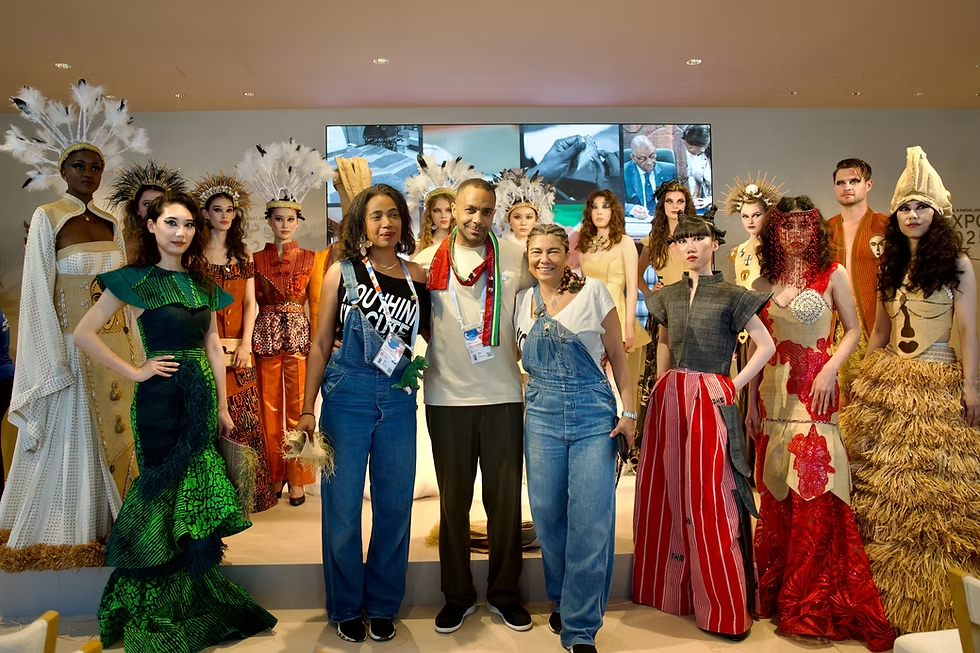
In the sunlit courtyard of his Libreville studio, Gabonese fashion designer Chouchou Lazare dries strands of raffia, preparing the natural fibres that have become his signature on the global fashion stage.
For centuries, raffia a textile derived from palm leaves was traditionally reserved for Gabonese nobility and village chiefs. Today, Lazare is transforming it into award-winning garments that honor African heritage while appealing to a global audience.
“This is raffia from Gabon, it’s special, it’s woven very finely, it’s a textile that deserves to be shown,” Lazare told AFP. His latest collection, showcased in Paris on February 28, featured the fibres braided, sewn, or glued onto bustiers, skirts, and hats never dyed, preserving their natural beauty.
From Humble Beginnings to International Recognition
Lazare’s journey began at the age of nine, helping his mother with sewing to support the family. Without formal training, he honed his craft designing for the two most important women in his life his mother and grandmother.
“When I prepare my shows, I want to see queens, women who fully own who they are,” he said, describing the inspiration behind his latest collection.
His work has earned him international acclaim: first prize at the 2002 Saint-Etienne International Design Biennial in France, and a presentation of his creations to French President Emmanuel Macron and Gabonese President Brice Oligui Nguema in November 2025. A photograph of the meeting now hangs proudly in his workshop.
Raffia: Cultural Heritage and Global Appeal
In Gabon, raffia carries deep cultural and spiritual significance, featured in traditional weddings and bwiti spiritual ceremonies. The Ministry of Sustainable Tourism and Crafts describes the fabric as a “natural resource to be preserved” and an emblem of Gabonese and African cultural heritage.
Despite its roots, Lazare insists raffia is for everyone. “It’s for everyone,” he says, as he inspects fibres drying on his balcony.
Lazare’s recent accolades include an achievement award at the Fashion Annual Show in Paris, which for over 25 years has celebrated African designers. As president of the Association of Gabonese Stylists and Creators, he mentors emerging designers, promoting craftsmanship and innovation.
A Vision for the Future
Through his work, Lazare hopes to see raffia recognized as a national treasure for Gabon and a symbol of African creativity on the world stage. His mission combines sustainability, heritage, and high fashion, proving that traditional textiles can shine in contemporary design.
“Raffia represents more than fabric it represents culture, identity, and pride,” Lazare said. “Seeing it appreciated internationally feels like diamonds.”
With every braid and weave, Lazare is not only crafting fashion but also weaving Gabonese heritage into the fabric of global style.