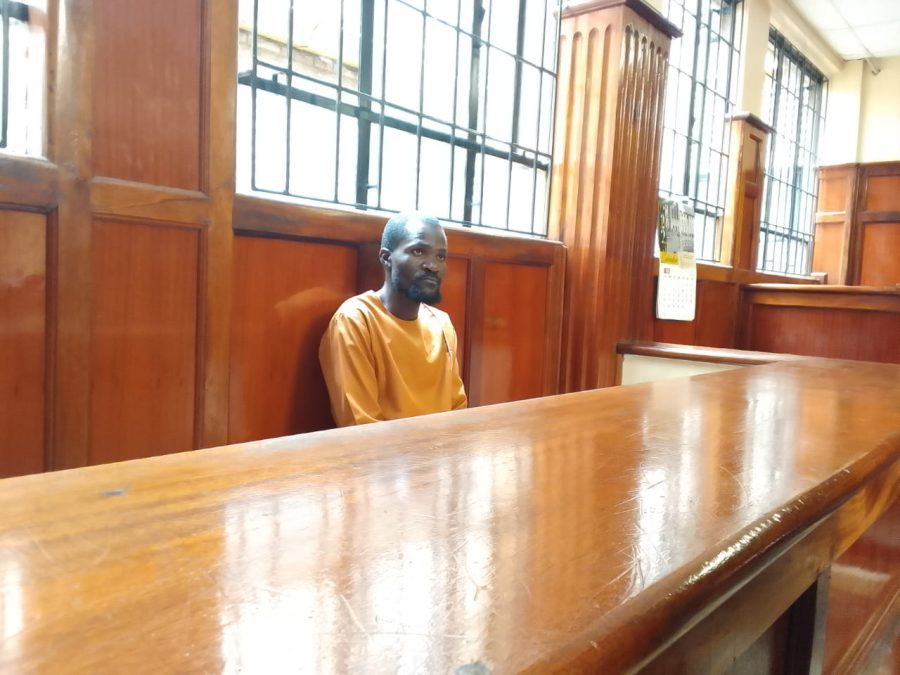
A Nairobi court has acquitted Nuru Maloba Okanga of all charges related to the alleged publication of false, defamatory, and threatening information online, bringing to an end a high-profile cybercrime case that has been before the courts since 2024.
In a ruling delivered on Tuesday, January 20, 2026, Milimani Principal Magistrate Rose Ndombi found that the prosecution had failed to establish a prima facie case against Okanga. Consequently, the court ruled that the accused had no case to answer and ordered his immediate release.
“Pursuant to section 210 of the Criminal Procedure Code, this court finds that the accused person, Nuru Okanga Maloba, has no case to answer, is hereby acquitted of all three counts, and shall be set free forthwith unless lawfully held,” Magistrate Ndombi ruled.
Background of the Case
Okanga had been charged under the Computer Misuse and Cybercrime Act No. 5 of 2018, with the prosecution alleging that he published false information online that was defamatory and calculated to cause fear and panic among the public.
According to the charge sheet, the accused was alleged to have committed the offences between June 7 and June 10, 2024, at an undisclosed location within Kenya. Prosecutors claimed that, together with others not before the court, Okanga used several social media platforms, including TikTok and YouTube accounts operating under the name “Riba News @ribanews” and “Siasa TV KE backup,” to publish videos with inflammatory captions.
One of the captions cited in court allegedly read, “Nuru Okanga Rigathi Gachagua Piga Ruto Risasi,” a statement that the prosecution argued was intended to incite fear, panic, and reputational harm against the country’s top leadership.
Additional Counts
In the second count, the prosecution alleged that on June 12, 2024, Okanga and others unlawfully published another captioned video via the TikTok account “siasa_tv__backup,” which read, “Pilot wa Ruto adungwe shindani.” The State argued that the content was designed to provoke public alarm and undermine confidence in Kenya’s executive leadership.
The third count accused Okanga of providing telecommunication services without a valid licence, contrary to section 24 of the Kenya Information and Communication Act No. 2 of 1998. Prosecutors claimed that the operation of the cited online channels amounted to unlicensed telecommunication services.
Court’s Determination
In her ruling, Magistrate Ndombi held that the prosecution failed to sufficiently link Okanga to the alleged offences or demonstrate that the legal threshold required to place him on his defence had been met. As a result, the court acquitted him on all three counts.
The acquittal underscores the judiciary’s insistence on strict adherence to evidentiary standards, particularly in cases involving digital speech, cybercrime, and freedom of expression. The ruling also comes amid growing national debate over the regulation of online content and the application of cybercrime laws in Kenya.
With the case now concluded, Okanga walks free, marking a significant legal outcome in one of the more closely watched cybercrime prosecutions in recent years.