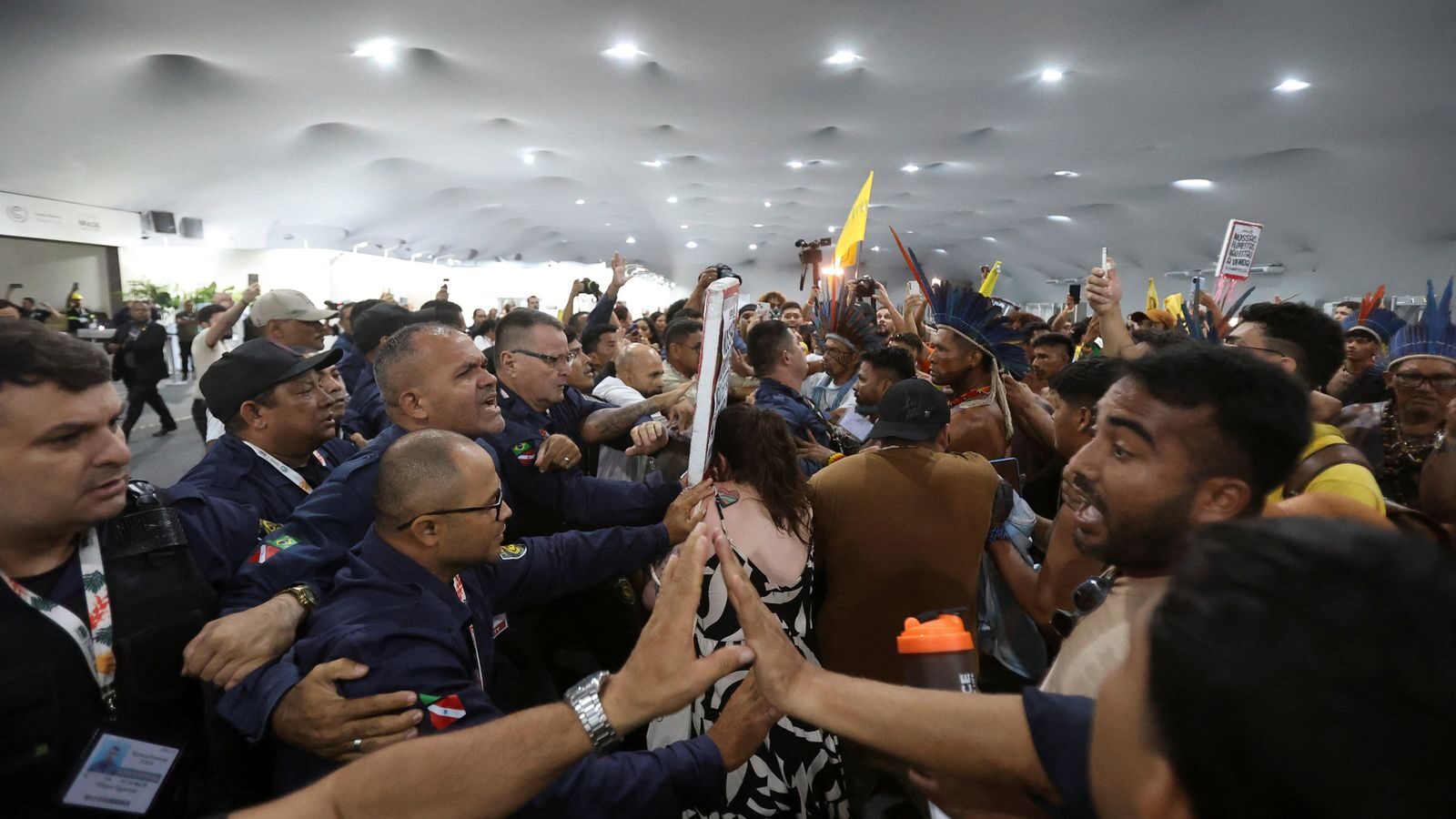
Protesters carrying signs reading “Our forests are not for sale” broke through security lines at the COP30 climate talks on Tuesday night in Belém, Brazil, in a rare security breach at the high-profile conference.
BBC journalists witnessed United Nations security personnel running alongside Brazilian soldiers, urging delegates to evacuate the venue. The UN confirmed that two security staff sustained minor injuries and that the incident caused limited damage to the conference facilities.
Social media footage showed demonstrators, including members of indigenous communities and supporters of the left-wing Brazilian youth movement Juntos, storming the entrance. Some were dressed in traditional indigenous attire, chanting and kicking down doors before clashing with security personnel.
A security guard told Reuters that he was struck in the head by a drum thrown by a protester.
The protesters breached the first layer of security but were stopped from advancing further into the venue, the UN said. Both Brazilian and UN authorities are investigating the incident.
COP30: Context and Controversy
This year’s COP30 talks, held from 10 to 21 November 2025, mark the first time the conference has taken place in Brazil and coincide with the tenth anniversary of the Paris climate agreement. Delegates from nearly 200 countries are attending the summit on the edge of the Amazon rainforest.
The location has drawn controversy due to the impact of climate change and deforestation on Amazon communities. Critics point to Brazil’s continued issuance of oil and gas licenses, alongside coal production major contributors to global warming.
An indigenous leader from the Tupinamba community told Reuters:
“We can’t eat money. We want our lands free from agribusiness, oil exploration, illegal miners, and illegal loggers.”
The meetings have been labeled the “Indigenous Peoples COP”, with organizers promising to place indigenous voices at the center of discussions. Brazil’s Minister of Indigenous Peoples, Sonia Guajajara, called the event historic, noting that approximately 3,000 indigenous representatives from around the world were expected to attend.
Indigenous Role in Climate Action
A UN report earlier this year highlighted that indigenous peoples safeguard 80% of the planet’s remaining biodiversity but receive less than 1% of international climate funding. Their dependence on natural resources makes them particularly vulnerable to climate change.
Brazilian President Luiz Inácio Lula da Silva, at the summit’s opening, emphasized the importance of combating climate denial and misinformation. He described the Amazon as essential to global climate solutions, stating that COP30 aims to be the “COP of truth” amid rising disinformation.
The president noted that the Amazon, home to nearly 50 million people including 400 indigenous groups, represents the most diverse biome on Earth and is central to international climate efforts.