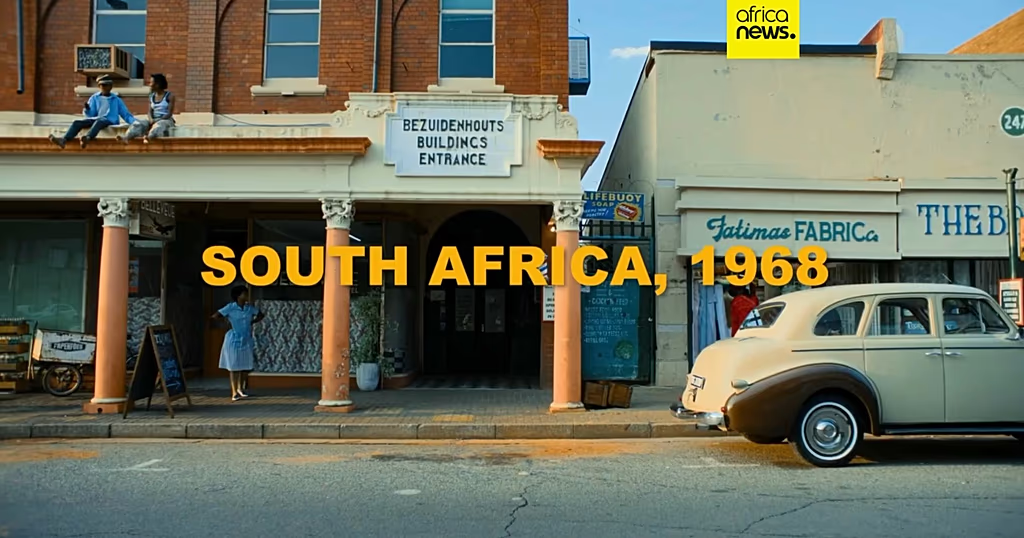
The film Laundry, directed by Zamo Mkhwanazi, transports audiences to Johannesburg in 1968, a whites-only neighborhood where Black-owned businesses were under constant scrutiny and threat from the apartheid regime. The story follows Khutala, whose family runs a laundry business during a period when resistance to oppression had been largely dismantled.
“This is based on a story that happened to my mother’s family,” Mkhwanazi said. “Those events happened in the late 50s; however, this film is set in the late 60s because it was a very interesting moment in terms of the beginning of the resuscitation of the struggle after the leaders had been imprisoned. Any resistance had been destroyed, so this was a moment where there was really no one fighting for Black people.”
A Collaborative Approach to Filmmaking
Mkhwanazi emphasized his collaborative directing style, particularly in shaping the lead character:
“I’m always interested to see the ideas that the performers have. I felt that with my lead—he worked very hard and asked many questions before we even got on set, so I was very excited to see what he would do.”
This approach allows performers to contribute actively to storytelling, enriching the film’s portrayal of historical realities and personal narratives.
Speaking Truth to Power
For Mkhwanazi, Laundry is more than a historical drama; it is a vehicle for addressing ongoing social and economic injustices in South Africa.
“The conversation on reparations, restitution, and redistribution of wealth in South Africa has come to a complete stop. It’s completely ignored, and we just act like everyone must carry on and build their lives, but we’ve been stolen from. Not having that conversation is about entrenching injustice and allowing room for more injustice,” the director said.
The film underscores the importance of remembering and confronting historical inequities while continuing dialogues on activism, social justice, and accountability.
Festival Recognition
Laundry is part of the competition lineup at the 2026 Geneva International Film Festival and Human Rights Forum, which presents fiction and documentary films examining authoritarianism, international abuses, and collective struggles. This year’s theme, “Between Resistance and Revolt: The Power of Images”, highlights the role of cinema in documenting, challenging, and inspiring social change.
The festival in Geneva is underway and runs until 15 March 2026, showcasing films that provoke discussion on human rights, justice, and historical memory.
Through Laundry, Mkhwanazi contributes a deeply personal yet universally resonant story, reminding audiences of the resilience of those who resisted oppression and the ongoing need to confront injustice through art.