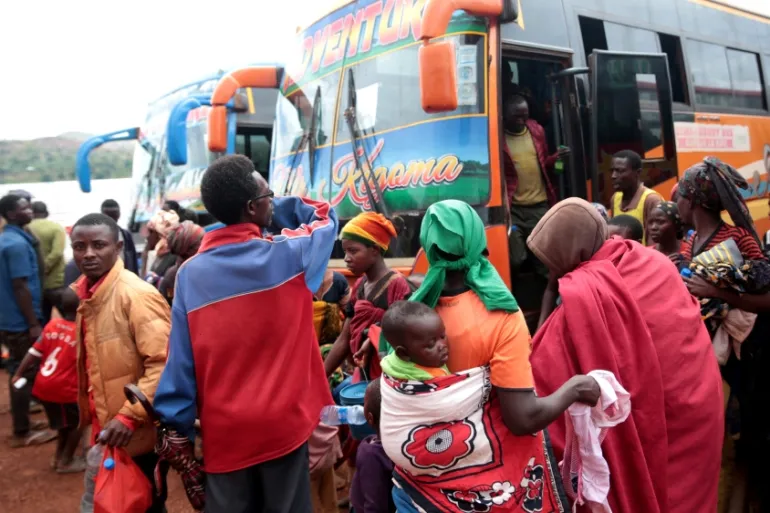
Scores of Burundians returned home from Tanzania this week as part of an ongoing push by the Tanzanian government to repatriate thousands of citizens who had been living in refugee camps for years.
For some returnees, the move represents a positive step. Paul Kabura, who returned with his family, said,
“I’m happy to have come back to my country. I didn’t flee the war; I was there for economic reasons. I’m pleased because I’m going to look for ways to survive here with my family, and the children will be able to go back to school.”
Others recounted negative experiences while in Tanzania.
Vestine Uwizeyimana said, “They [Tanzania] closed the market, they closed the schools and our children were no longer studying, they destroyed our houses you can see that we can’t say the situation was good. We weren’t allowed to move around, we were just like prisoners.”
The repatriation effort involves dismantling two large refugee camps, Nduta and Nyarugusu, a process that has been underway for several years. In recent weeks, the Burundian government accelerated the program. Odette Kamariza, Director-General for Repatriation at the Burundian Ministry of the Interior, explained,
“From late December, we started implementing this accelerated repatriation because, according to the plans in place, we were supposed to finish with the Nduta and Nyarugusu camps in June.”
The UNHCR confirmed the arrival of 4,200 returnees from Nduta camp alone.
Spokesperson Bernard Ntwari said, “We have just welcomed 4,200 returnees from Nduta refugee camp in Tanzania. As you have seen, it’s a lot of work and people are very, very happy to be back.”
However, challenges remain. According to the United Nations, up to 17,000 Burundians in Tanzania have indicated they cannot return due to fears for their safety or potential political persecution, highlighting the ongoing humanitarian and political complexities surrounding repatriation efforts in the region.