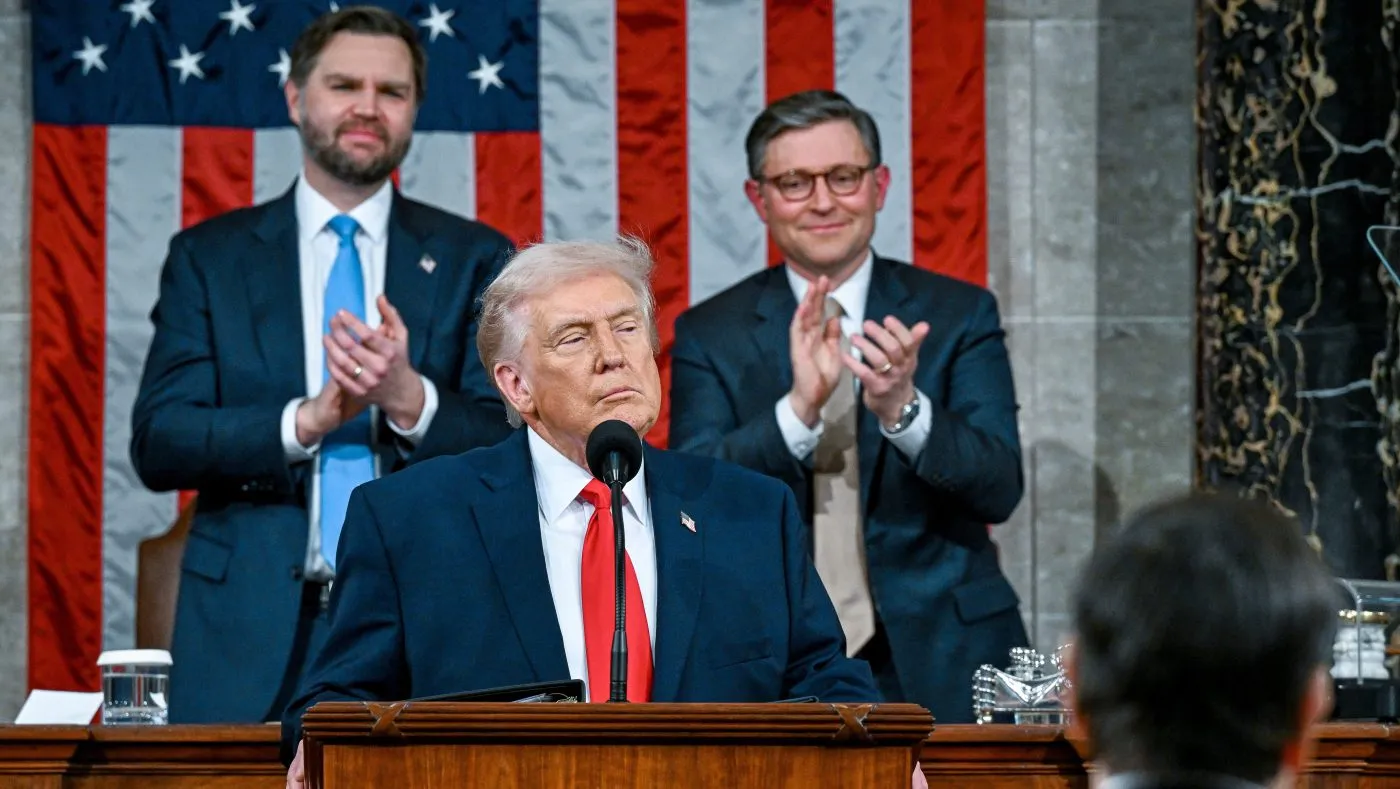
U.S. President Donald Trump on Tuesday claimed that Iran is seeking to develop missiles capable of reaching the United States, while also accusing Tehran of attempting to rebuild its nuclear program despite American strikes last year.
Missile and Nuclear Concerns
Speaking during his State of the Union address, Trump warned that Iran has already developed missiles that can threaten Europe and U.S. bases overseas, and is now working toward intercontinental capabilities.
“They’ve already developed missiles that can threaten Europe and our bases overseas, and they’re working to build missiles that will soon reach the United States of America,” Trump said.
According to the U.S. Defense Intelligence Agency (2025), Iran could potentially develop a militarily viable intercontinental ballistic missile (ICBM) by 2035 if it chooses to pursue the capability. Currently, Iran’s arsenal includes short- and medium-range ballistic missiles with ranges up to 1,850 miles (3,000 kilometers), far short of the 6,000 miles needed to reach the continental United States.
High-Stakes Negotiations
Washington and Tehran have held two rounds of talks aimed at reaching a new nuclear agreement to replace the deal Trump withdrew from during his first term. The U.S. has demanded zero uranium enrichment, restrictions on Iran’s missile program, and an end to its support for armed groups in the region conditions Iran has rejected.
Trump ordered strikes on three Iranian nuclear sites last year, claiming afterward that Tehran’s atomic program had been “obliterated.” On Tuesday, he alleged Iran is once again pursuing “sinister nuclear ambitions.”
Diplomacy vs. Force
While Trump said his preference is diplomacy, he reiterated that he would not allow Iran to obtain nuclear weapons. The U.S. has deployed a significant military force to the Middle East, including two aircraft carriers, warplanes, and naval assets, as a show of strength.
Negotiations with Tehran are set to continue on Thursday.
Wider Foreign Policy Notes
Trump’s address largely focused on domestic issues, making no mention of China and only briefly referencing Russia. He said he was working to end the conflict between Russia and Ukraine and repeated his claim of ending eight wars since returning to office in January 2025. He also praised NATO’s decision to spend five percent of GDP on defense, a move made under pressure from his administration.