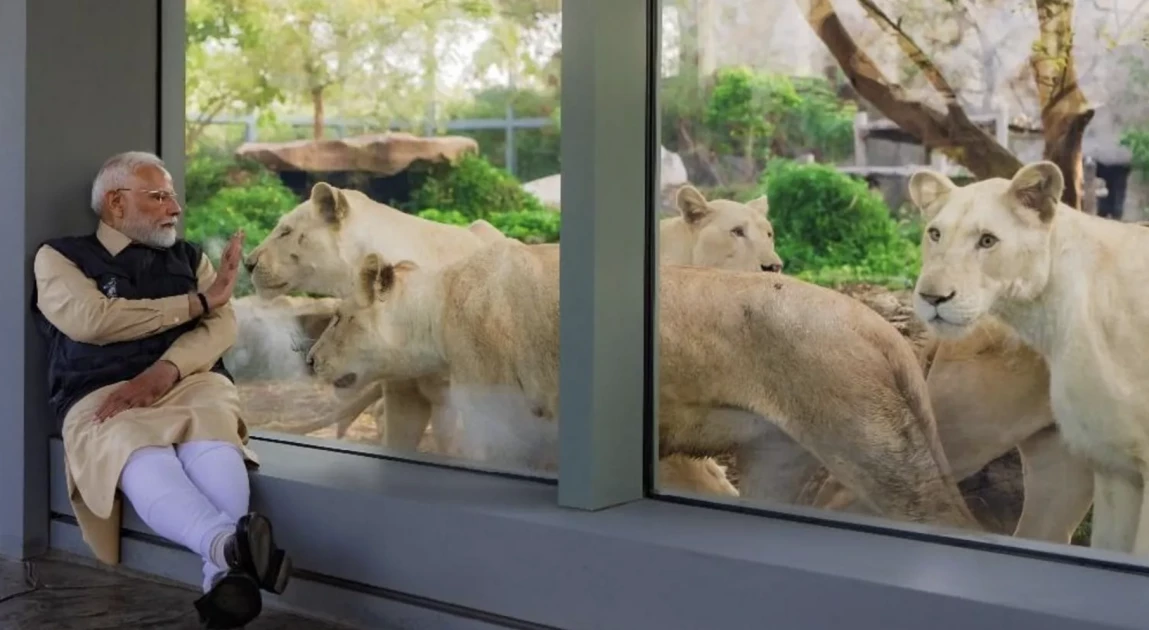
Leading wildlife conservation experts have called on India to suspend all imports of critically endangered species, raising serious concerns over the operations of Vantara, a massive private zoo and animal rescue centre owned by the son of Asia’s richest man.
Located in Gujarat state, the Green Zoological Rescue and Rehabilitation Centre, popularly known as Vantara, has reportedly acquired tens of thousands of animals in recent years. While India’s Supreme Court previously cleared the facility of wrongdoing, a new report by the Convention on International Trade in Endangered Species of Wild Fauna and Flora (CITES) has found multiple inconsistencies in its animal imports, potentially violating global wildlife trade laws.
The CITES Secretariat’s review revealed that a “large number of imports appear to be inconsistent” with the treaty’s rules governing Appendix I species the most endangered animals on the planet. The watchdog has urged India to implement stronger oversight and reforms to ensure the facility does not inadvertently contribute to illegal wildlife trade.
Neither Vantara nor India’s environment ministry responded to requests for comment.
Mounting Questions Over Animal Imports
According to CITES, Vantara reported having around 47,000 animals, although the facility itself claims to house more than 150,000. Conservationists have questioned these discrepancies and raised concerns about the sourcing of animals from across the world.
“This report raises more questions than it answers,” said Mark Jones, head of policy at the wildlife organisation Born Free. “Why import so many animals, and who is supplying them? We must ensure these species aren’t being traded for profit.”
Among the cases cited by CITES are the Tapanuli orangutan, the world’s rarest great ape, with only about 800 individuals remaining in Indonesia. One was reportedly imported to India via the United Arab Emirates despite the absence of any legitimate breeding programs for the species in Indonesia, where all wild Tapanuli orangutans reside.
Other questioned imports include cheetahs from Syria, a gorilla from Haiti, and bonobos from Iraq.
“It’s really shocking the numbers are huge,” said Panut Hadisiswoyo, founder of the Orangutan Information Centre in Indonesia. “Vantara is exploiting legal loopholes and undermining global conservation efforts.”
India Faces Pressure to Act
While the CITES report acknowledged Vantara’s state-of-the-art facilities, it urged India to tighten import controls, strengthen regulatory capacity, and scrutinise wildlife trade permits more rigorously.
Independent wildlife trade expert Daniel Stiles described the findings as “a true examination of Vantara,” adding, “We’ll see if anything changes for the better.”
CITES has requested that India submit a progress report addressing these issues. Failure to comply could result in trade restrictions or sanctions under international wildlife protection agreements.
“This situation is deeply damaging to India’s global conservation credibility,” warned K. Yoganand, a veteran wildlife specialist. “Restoring that reputation will require transparency and exemplary action.”