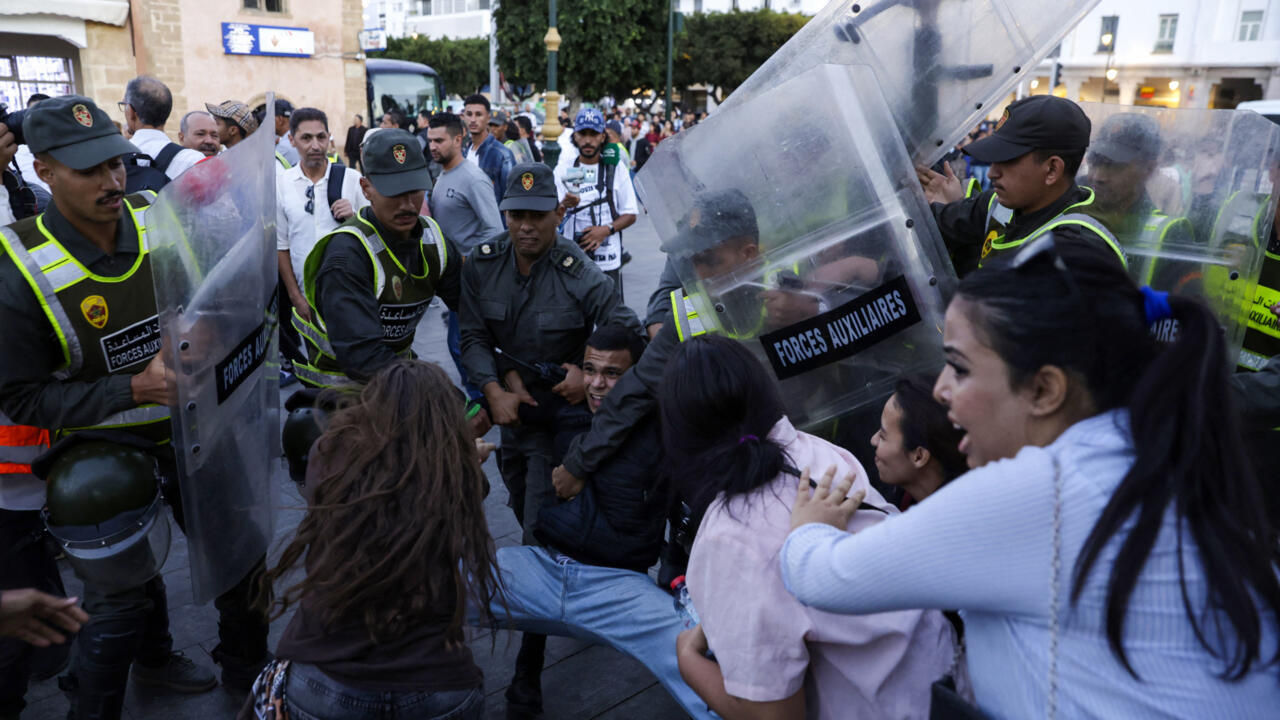
Morocco has entered its fourth consecutive day of unrest as youth-led protests escalated into violent clashes with security forces. On Tuesday, September 30, 2025, hundreds of demonstrators marched through major cities demanding better health care, education, and employment opportunities, while also denouncing corruption and public spending priorities.
The movement, driven largely by the social media–based group GenZ 212, has captured national attention. Although the group has urged protesters to remain peaceful, incidents of rioting have been reported. Cars and banks were set ablaze, and stone-throwing was documented in multiple locations. In Oujda, a protester was injured after being struck by a police car, according to state media.
The Moroccan Association for Human Rights (AMDH) has accused security forces of excessive force, including physical assaults and arbitrary arrests. While dozens were detained, most have since been released; AMDH reports that 37 young people remain under investigation on bail.
Protesters have also targeted government spending on preparations for the 2030 FIFA World Cup, contrasting it with the country’s underfunded hospitals. One widely shared slogan in Rabat read: “At least the FIFA stadium will have a first aid kit! Our hospitals don’t.”
The Moroccan government has acknowledged the growing discontent, with the ruling coalition pledging to engage in dialogue with the youth “within institutions and public spaces to find realistic solutions.” Officials also praised the “balanced reaction” of security forces, though rights groups contest that characterization.
The demonstrations echo a broader wave of youth-led uprisings this year across Asia and Africa. In Nepal, mass protests led to the prime minister’s resignation, while Madagascar’s president dissolved his government just days ago in response to mounting unrest.
As Morocco braces for further demonstrations, the balance between dialogue and confrontation will be critical in determining whether this movement sparks meaningful reform or deepens political instability.