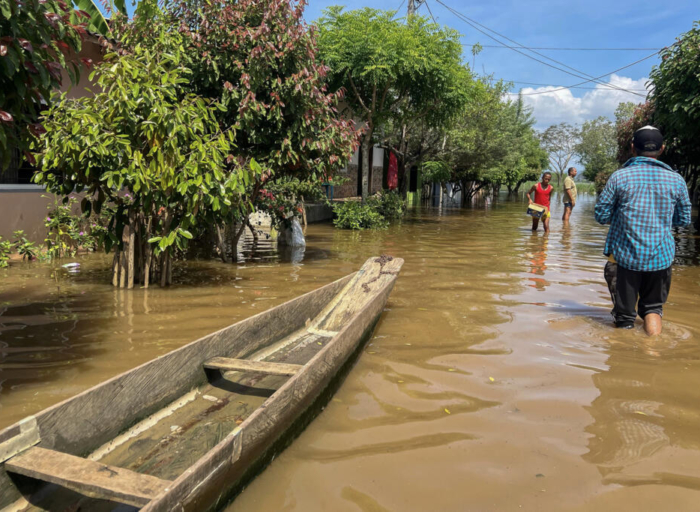
Kingston, Jamaica Hurricane Melissa has strengthened into a powerful Category 5 hurricane, posing a severe threat to the northern Caribbean with potentially catastrophic winds, storm surges, and torrential rainfall expected over the coming days.
The Government of Jamaica has ordered mandatory evacuations in several high-risk areas, including Kingston, as officials warn of extreme flooding and infrastructure damage. During a press briefing on Sunday, authorities confirmed the closure of both international airports and the activation of 881 emergency shelters across the island.
“Many of these communities will not survive the flooding,” said Desmond McKenzie, Jamaica’s Minister of Local Government. “Kingston is extremely low. No community in Kingston is immune.”
Prime Minister Andrew Holness reiterated the urgency of the situation, ordering evacuations for Port Royal and six other vulnerable coastal zones. “I urge Jamaicans to take this weather threat seriously and take all measures to protect yourselves,” he stated.
As of Sunday night, Melissa was located roughly 125 miles (205 km) south-southwest of Kingston with maximum sustained winds of 145 mph (230 km/h), according to the U.S. National Hurricane Center (NHC). The hurricane is moving slowly westward at 5 mph (7 km/h) a pace experts say could worsen the disaster’s impact.
Meteorologists predict up to 30 inches (76 cm) of rainfall across Jamaica and southern Hispaniola (Haiti and the Dominican Republic), with isolated areas possibly receiving 40 inches (1 meter).
The NHC has warned of widespread power outages, severe infrastructure damage, and the potential isolation of entire communities as the storm grinds across the region.
Despite evacuation orders, some residents in Port Royal have chosen to remain in their homes. Longtime resident Ann Marie Chamberlain, 51, said she trusted in faith and experience to weather the storm:
“We know danger when we’re in it and right now, we’re not. The boats are secured, roofs are reinforced. We’re prepared,” she said, citing past unpleasant experiences in public shelters.
Across the island, Jamaicans have been reinforcing homes, securing fishing vessels, and stocking supplies. Derrick Powell, a marketing manager in Kingston, reflected on the nation’s readiness:
“We’ve lived through storms like Gilbert. People are cautious, but we know what to expect.”
Melissa is projected to continue westward, approaching Cuba by late Tuesday and the Bahamas by Wednesday, potentially delivering up to 300 millimetres of rain in eastern Cuba.
The Cuban government has already issued hurricane watches for Granma, Santiago de Cuba, Guantánamo, and Holguín provinces.
The storm has already caused at least four fatalities three in Haiti and one in the Dominican Republic and left widespread flooding, landslides, and infrastructure damage in its wake. In Haiti, overflowing rivers and collapsed bridges have isolated several communities, while in the Dominican Republic, nearly 200 homes have been damaged and half a million residents affected by disrupted water systems.
Jamie Rhome, Deputy Director of the NHC, warned that the outlook remains “increasingly dire,” as Melissa is expected to move slowly for several more days, compounding its destructive potential.
The Bahamas Department of Meteorology cautions that tropical storm or hurricane conditions could reach the southeastern and central Bahamas, as well as the Turks and Caicos Islands, early next week.
Melissa marks the 13th named storm of the 2029 Atlantic hurricane season, which runs from June 1 to November 30. The U.S. National Oceanic and Atmospheric Administration (NOAA) had previously forecasted an above-average season with 13–18 named storms.