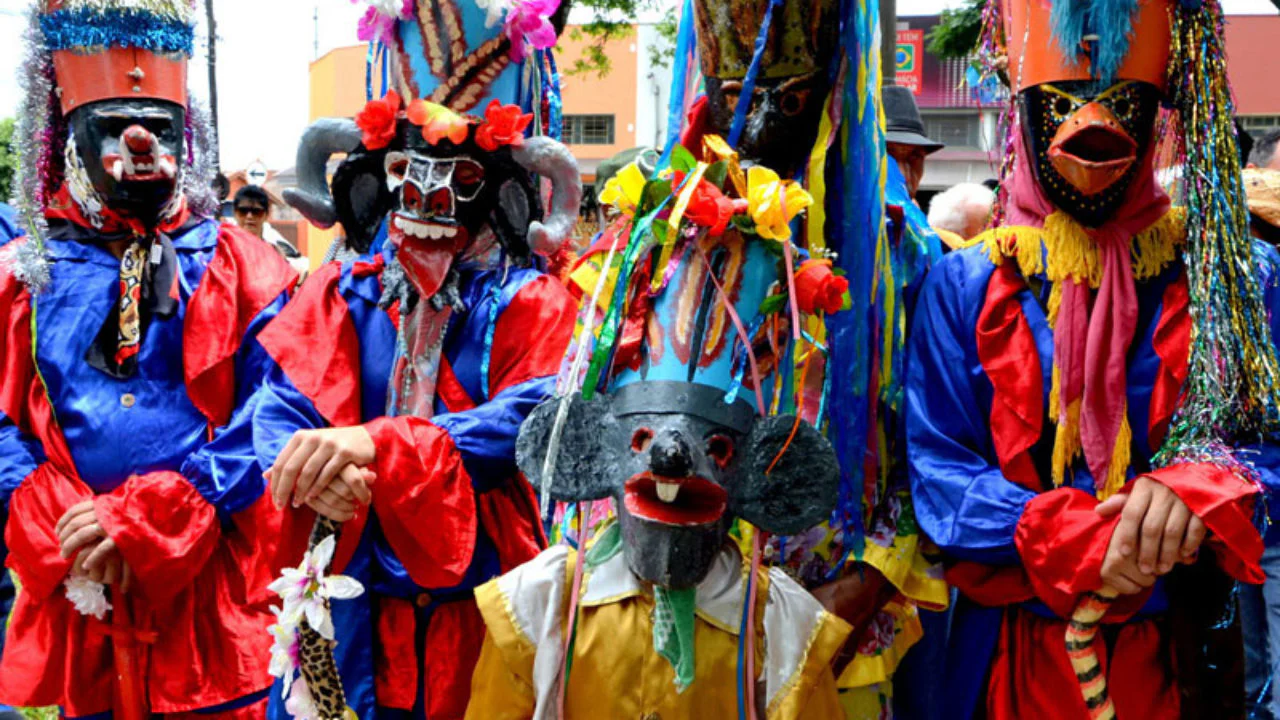
Members of the Bright Star of Bethlehem cultural group brought colour, rhythm, and tradition to the streets of Morro da Formiga, a favela in the Muda sub-district of Grande Tijuca in Rio de Janeiro’s north zone, as part of the annual Folia de Reis celebrations.
Dressed in vibrant costumes, the group paraded through the narrow streets to the steady beat of drums, drawing residents to doorways and balconies to watch the procession pass. The event forms part of Folia de Reis, a traditional festival linked to Epiphany that commemorates the biblical journey of the three magi to visit the infant Jesus.
Observed from Christmas through to January 20, Folia de Reis sees groups travel from house to house, particularly in lower-income neighbourhoods, offering music, prayers, and blessings. In return, they collect donations that are later used to prepare communal meals, reinforcing the festival’s emphasis on solidarity and shared responsibility.
The procession in Morro da Formiga reflected the rich cultural syncretism that characterises many Brazilian religious traditions. Catholic symbols and narratives were displayed alongside Afro-Brazilian elements, highlighting the blending of faiths and practices that have evolved over generations within local communities.
Beyond its religious significance, the Bright Star of Bethlehem group plays an important social role. By involving children and teenagers in rehearsals and performances, the group provides structure, creative expression, and a sense of belonging. In an area marked by economic hardship and persistent concerns about violence, these activities offer young people an alternative space rooted in community, tradition, and collective identity.
For residents, the parade was more than a celebration of faith. It served as a reminder of cultural continuity and resilience, reinforcing communal bonds in a neighbourhood where such moments of shared joy and purpose carry deep meaning.