
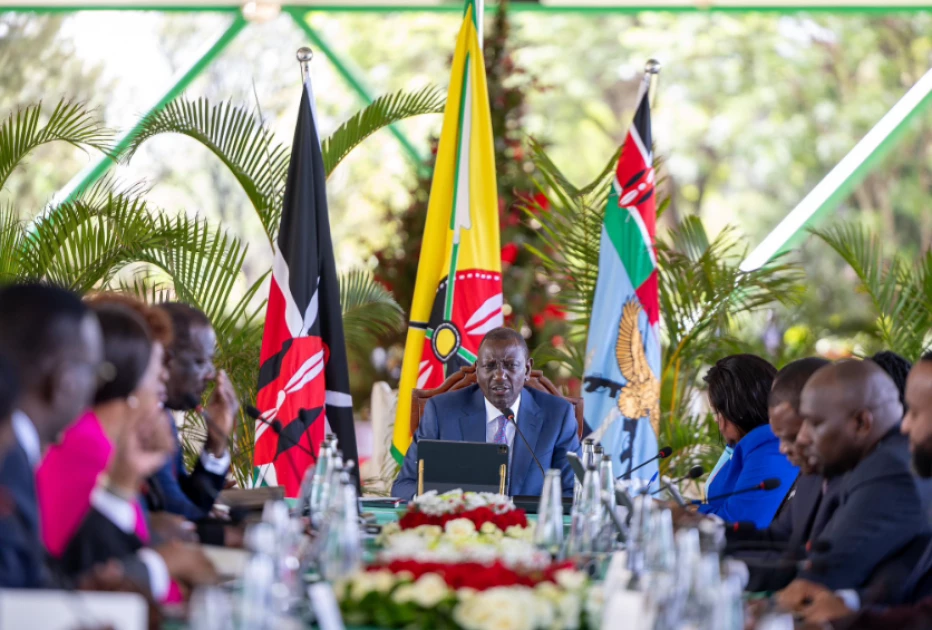
Nairobi, Kenya – The Cabinet has approved a Ksh.4.7 trillion budget for the 2026/27 financial year, surpassing the current fiscal year by Ksh.100 billion. The move signals continued fiscal expansion, though the government acknowledges the persistence of a budget deficit that will require borrowing and other financing measures.
Revenue and Expenditure Targets
According to a Cabinet dispatch issued Tuesday:
- Revenue target: Ksh.3.53 trillion
- Total expenditure: Ksh.4.7 trillion
- Recurrent spending: Ksh.3.46 trillion
- Development projects: Ksh.749.5 billion
- Transfers to county governments: Ksh.495.7 billion
- Contingency Fund: Ksh.2 billion
County Allocations
Under the Division of Revenue Bill, 2026, county governments are set to receive Ksh.420 billion as an equitable share, representing 21.9% of the most recent audited revenue, in line with constitutional requirements.
Additional allocations include:
- Equalisation Fund: Ksh.15.2 billion
- County Governments Additional Allocation Bill, 2026: Ksh.75.7 billion
This brings total transfers to counties to Ksh.495.7 billion.
Positive Outlook
The Cabinet statement projected a GDP growth rate of 5% in 2025 and 5.3% in 2026, supported by:
- Favourable weather conditions
- Improved agricultural productivity
- Climate-smart investments
- Continued implementation of the Bottom-Up Economic Transformation Agenda (BETA)
The 2026 Budget Policy Statement was described as a transition from scaled-up investments toward sustained economic growth.
Priority Spending Areas
Key sectors earmarked for funding include:
- Education
- Health
- Energy
- Infrastructure
- Agriculture
- Social protection
- National security
The government also pledged reforms in public finance management, digitisation, State-owned enterprises, and public-private partnerships.
Next Steps
The Budget Policy Statement, the fourth under the Kenya Kwanza Administration, will now be submitted to Parliament to guide fiscal strategy for the 2026/27 financial year.
Conclusion
Kenya’s 2026/27 budget reflects both ambition and caution: expanding spending to drive growth while grappling with a persistent deficit. With counties set to receive significant allocations and reforms targeting efficiency, the fiscal plan underscores the government’s balancing act between development priorities and financial sustainability.

