Sanitation Crisis, Unemployment and Poor Services Shape South Africa's Local Elections
Millions of voters prepare to elect municipal leaders as service delivery failures, youth unemployment and growing political dissatisfaction reshape South Africa's political landscape.
0 likes
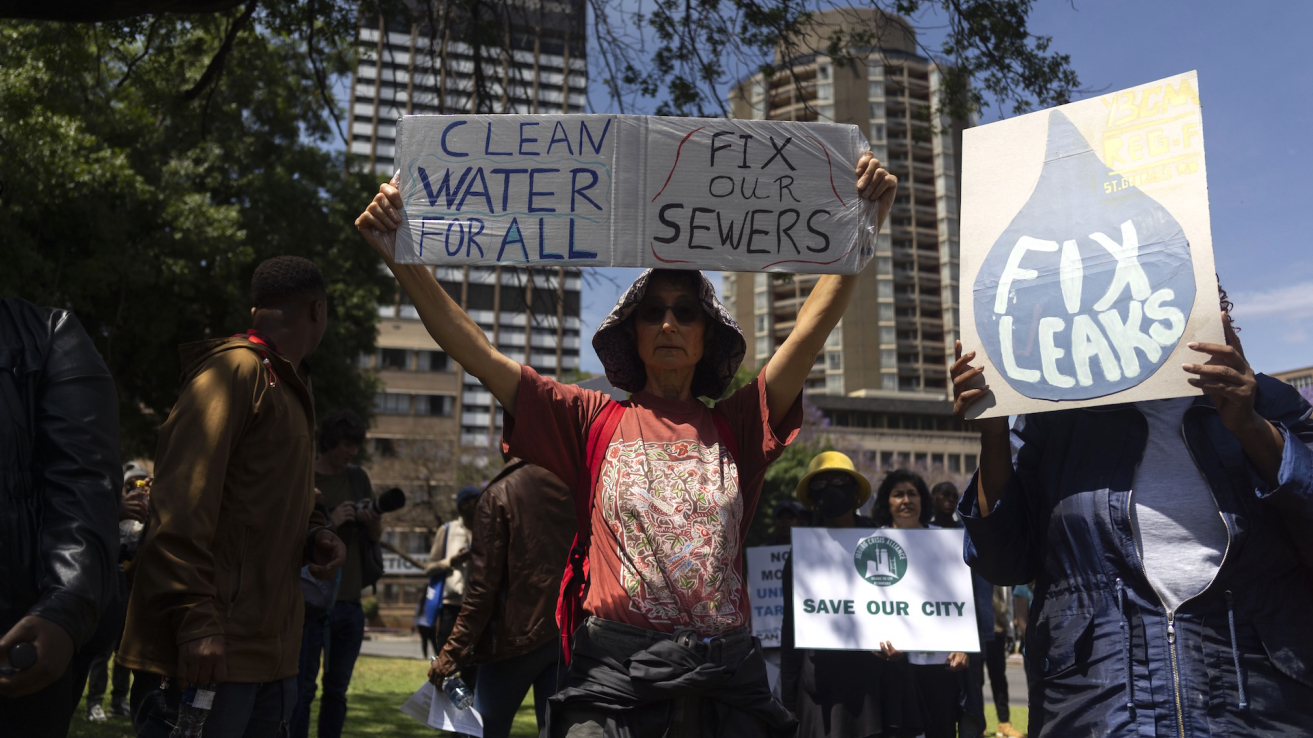
Millions of South Africans are heading towards the November 4 local government elections amid growing frustration over water shortages, poor sanitation, electricity disruptions and unemployment, raising questions about the future of traditional political strongholds such as the African National Congress (ANC).
For Ntombekhaya Makeleni, the decision to vote in South Africa's upcoming local government elections is deeply personal.
The 53-year-old resident of Khayelitsha, Cape Town, stopped using communal toilets in her neighbourhood after a group of men attempted to force their way inside while she was using one before dawn.
She now relies on a bucket that is emptied outside, a situation shared by many residents of the impoverished township, where thousands of people live in informal settlements without access to proper sanitation facilities.
For Makeleni, the lack of basic services has become a major reason to participate in the November 4 elections.
"I will be voting because after voting, things will be fixed," she told Agence France-Presse (AFP).
Her experience reflects the everyday challenges facing many South Africans as they prepare to elect municipal leaders responsible for delivering essential public services.
Poor Service Delivery Becomes Major Election Issue
Access to clean water, electricity, proper sanitation and reliable infrastructure has emerged as a major concern ahead of the elections.
More than 29 million registered voters are expected to participate in a political contest taking place against a backdrop of widespread unemployment and dissatisfaction with municipal service delivery.
In Durban, 27-year-old Nikesh Nunkoo, who lives in Shallcross, said water interruptions in his neighbourhood could last between three days and two weeks.
Despite having voted in three previous elections, he remains uncertain about participating this time, expressing doubts about whether local government will improve residents' living conditions.
"I don't have any hope that things would be better in the next five years," he said.
For other young residents, frustration has translated into a decision not to vote.
Nkanyiso Hadebe, 24, who lives in an informal settlement in Durban's Chatsworth area, said he had lost confidence in the electoral process.
"I will not vote because voting changes nothing," he said.
Their experiences illustrate the growing challenge facing political parties as they attempt to convince frustrated communities that local elections can deliver meaningful improvements.
ANC Faces Growing Political Pressure
The November 4 elections are expected to provide an important indication of changing political loyalties in South Africa, particularly for the African National Congress, which dominated national politics for decades following the end of apartheid.
The ANC, historically associated with anti-apartheid icon Nelson Mandela, suffered a major setback in the 2021 municipal elections when its support fell below 50 percent for the first time since the country's transition to democracy in 1994.
The party subsequently lost its parliamentary majority in the 2024 general elections, marking another significant shift in South Africa's political landscape.
More than 500 political parties are registered with the Electoral Commission, reflecting increasing competition and fragmentation across the country.
An Ipsos survey published in March found that nearly half of South Africans felt no political party represented their views, while only 38 percent believed their municipalities were performing their responsibilities effectively.
These findings point to growing dissatisfaction with political representation and the delivery of essential public services.
Poor Communities Continue to Face Apartheid-Era Inequalities
Despite more than three decades of democracy, significant inequalities remain visible across South African cities.
In Cape Town, the contrast between wealthy suburbs and disadvantaged townships remains particularly pronounced, with many residents continuing to struggle with inadequate housing, sanitation and access to basic infrastructure.
Political commentator Kuhle Zwakala of Stellenbosch University said residents in poorer communities were primarily demanding reliable public services.
"Residents, especially in townships, are not asking for much. They want basic services," Zwakala said.
He added that continuing debates about electricity, water and sanitation more than 30 years after the end of apartheid reflected the scale of the challenges facing local authorities.
"To be talking about electricity, water and sanitation issues 30 years into democracy is a shame," he said.
However, political analyst Oscar van Heerden, a senior research fellow at the Centre for African Diplomacy and Leadership, cautioned that voting decisions are not determined by service delivery alone.
He noted that historical and identity-related factors continue to influence political support, including the ANC's traditional backing in historically black townships and the Democratic Alliance's support among sections of the white electorate.
DA and MK Party Seek Greater Political Influence
The Democratic Alliance (DA), South Africa's second-largest political party, is seeking to expand its influence, particularly in major urban centres.
The party currently governs Cape Town and has intensified its campaign in Johannesburg, focusing on the performance of the ANC-led municipal administration.
Another significant political player is former president Jacob Zuma's uMkhonto weSizwe (MK) Party, which emerged as the third-largest party in the 2024 national elections.
Its participation in local government elections adds another dimension to an increasingly competitive political environment.
The growing number of political parties and declining support for traditional political organisations could further reshape municipal leadership across the country.
Youth Unemployment Fuels Political Disillusionment
Young South Africans are among those expressing the strongest concerns about the country's economic prospects.
With unemployment standing at approximately 33 percent, many young people are questioning whether political participation can translate into better employment opportunities and improved living conditions.
Ntokozo Mthethwa, a 21-year-old information technology student from Durban's Umlazi township, said he doubted that political parties could fulfil their campaign promises.
"I see no future for me here," he said.
His concerns reflect broader frustrations among young people struggling to find employment and establish stable economic futures.
The challenge for political parties is not only to attract young voters but also to demonstrate how municipal leadership can contribute to economic development, job creation and improved public services.
Coalition Governments Expected to Shape Election Outcomes
Voter turnout is expected to play a significant role in determining the outcome of the elections.
Only 46 percent of registered voters participated in South Africa's 2021 local government elections, compared with 58.6 percent in the 2024 general elections.
The results are also expected to test the growing trend towards coalition governments, which have become increasingly common as political support becomes more fragmented.
Research by the Mapungubwe Institute for Strategic Reflection indicates that since the previous municipal elections, no single political party has maintained a majority in just under one-third of South Africa's 257 municipalities.
By February 2026, 74 municipalities were being governed through coalition arrangements or minority administrations.
These political arrangements have raised questions about the stability and effectiveness of local government, particularly where disagreements between coalition partners affect decision-making and service delivery.
The upcoming elections are therefore expected to provide another test of whether coalition administrations can establish stable municipal leadership and respond effectively to residents' needs.
South Africans Demand Better Local Government
As the November 4 elections approach, the experiences of residents such as Makeleni, Nunkoo and Mthethwa highlight the everyday issues influencing political participation across South Africa.
For some voters, the priority is access to safe toilets, clean water and reliable electricity. For others, it is employment, economic opportunity and confidence in political leadership.
The election will offer an important indication of how voters assess the performance of municipal authorities and whether dissatisfaction with service delivery is translating into changing political loyalties.
Ultimately, the challenge facing South Africa's political parties will extend beyond winning votes. Residents want to see tangible improvements in their daily lives, particularly in communities that continue to struggle with basic services more than 30 years after the end of apartheid.
Share this story
Choose a platform or copy the link