Tensions in Tbilisi, Georgia, escalated sharply on Saturday as police clashed with anti-government demonstrators attempting to storm the presidential palace. The unrest comes amid growing anger over alleged election fraud and the government’s suspension of European Union (EU) accession talks.
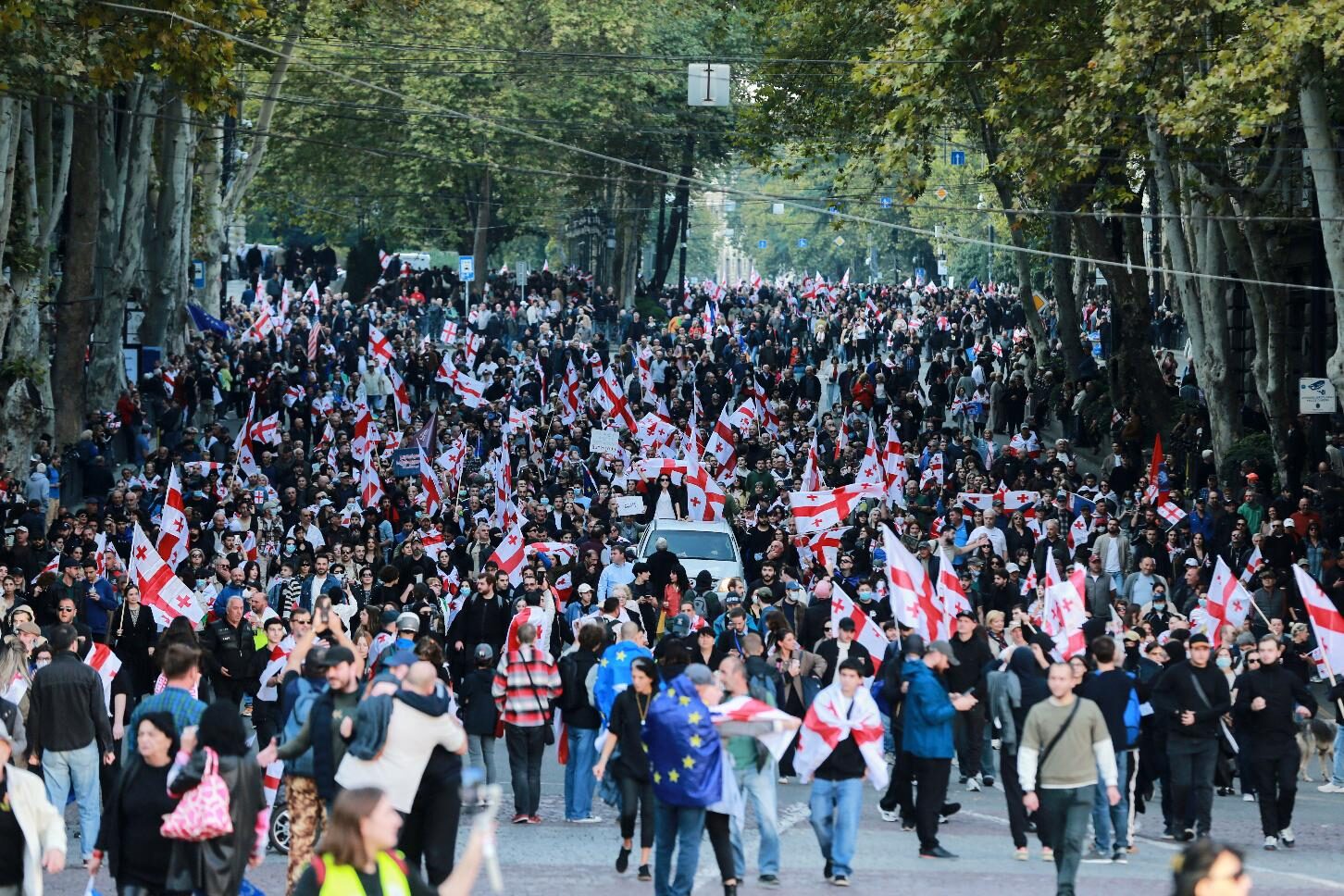
Security forces used water cannons and pepper spray to disperse the crowds after thousands of protesters, waving Georgian and EU flags, marched through the capital demanding new elections and the release of political prisoners. Authorities confirmed that five people were arrested, including opera singer Paata Burchuladze, one of the protest organizers.
Mounting Political Crisis
Georgia has been gripped by political turmoil since the ruling Georgian Dream party declared victory in last year’s election — a result the pro-European opposition insists was rigged. In the months that followed, the government suspended negotiations on joining the EU and launched a crackdown on activists, media, and opposition leaders, many of whom are now jailed.
Saturday’s protest coincided with local elections, which the opposition largely boycotted, accusing the ruling party of suppressing dissent. Georgian Dream claimed majorities in all municipalities, winning over 80% of the vote — a result widely dismissed as illegitimate by government critics.
Clashes Outside the Presidential Palace
Violence erupted when a group of demonstrators tried to breach the presidential compound on Atoneli Street, prompting riot police to deploy pepper spray and make arrests.
According to officials, 21 police officers and six protesters were hospitalized with injuries.
Eyewitnesses described chaotic scenes as protesters fled tear gas and police charges. “It was very chaotic, and the police were running and arresting people,” said Irakli, 24, one of the demonstrators. “Our eyes were tearing up, and it was getting harder to breathe.”
A Divided Nation
Protesters accuse the Georgian Dream party of aligning with Moscow’s interests, with many sarcastically dubbing it “Russian Dream.” Urban Georgians, particularly the youth, are demanding a pro-Western future, while the ruling party maintains strong support in rural areas for its promise of stability.
Many demonstrators wore black clothing, helmets, and gas masks to avoid identification by AI surveillance cameras installed along Rustaveli Avenue, the epicenter of the protests. Hundreds have already been fined 5,000 Georgian lari each for participating in what authorities call “illegal gatherings.”
Calls for Change
Protesters continue to demand snap parliamentary elections and the release of political prisoners, vowing to maintain nightly demonstrations until their demands are met.
As Georgia’s internal divisions deepen, international observers warn the government’s escalating repression risks pushing the country further away from the European path it once championed — and closer into Moscow’s orbit.