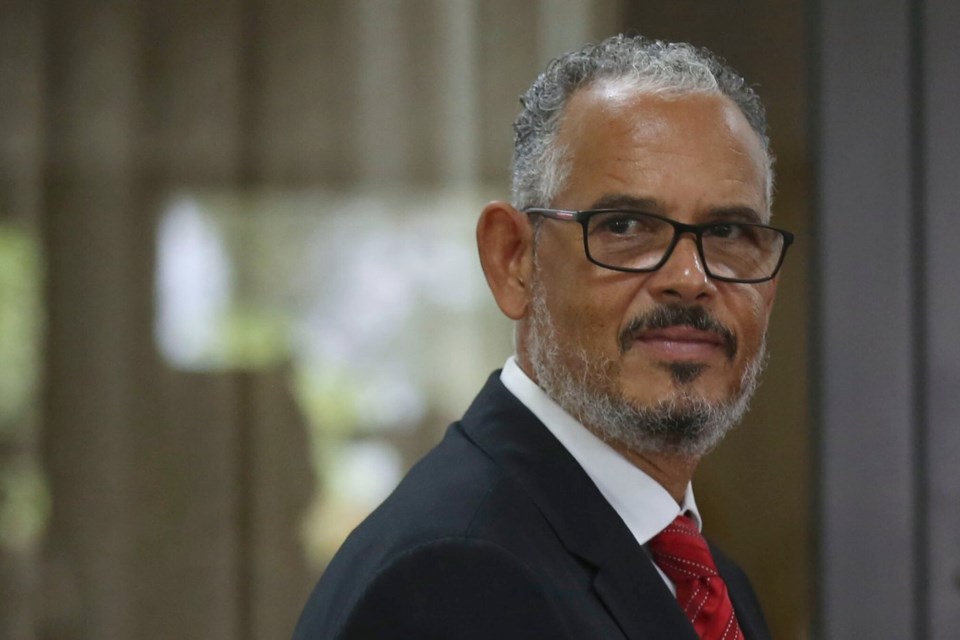
Port-au-Prince, Haiti – Haiti’s fragile political landscape shifted on Saturday, February 7, 2026, as the country’s nine-member presidential transitional council formally handed executive power to Prime Minister Alix Didier Fils-Aime, a 54-year-old businessman backed by the United States.
The handover, conducted under tight security, marks the end of nearly two years of transitional governance and places Fils-Aime at the helm of a nation grappling with unprecedented gang violence and political instability.
A Historic Transfer of Power
Council president Laurent Saint-Cyr underscored the gravity of the moment:
“Our watchwords are clear: security, political dialogue, elections, stability. Mr Prime Minister, in this historic moment, I know that you are gauging the depth of the responsibility you are taking on for the country.”
Fils-Aime now holds sole executive authority and faces the daunting task of organizing long-delayed elections amid a polarized political establishment. Haiti has not held elections since 2016, and the presidency has remained vacant since Jovenel Moïse’s assassination in July 2021.
Mounting Challenges
Haiti remains the poorest country in the Americas, plagued by gang violence that has spiraled out of control. According to the United Nations, gangs now control 90 percent of Port-au-Prince, killing nearly 6,000 people in 2025.
The humanitarian toll is staggering:
- 1.4 million Haitians have been displaced.
- Nearly half the population faces acute food insecurity.
- 1.2 million children under five are at risk of malnutrition.
International Support and Pressure
Amid fears of a political vacuum, the United States has thrown its weight behind Fils-Aime, deploying three warships to Haiti this week. US Secretary of State Marco Rubio emphasized the importance of Fils-Aime’s leadership in combating gangs and stabilizing the island.
Washington also sanctioned two council members and a minister, accusing them of gang ties.
Meanwhile, Haitian police have launched a large-scale offensive in central Port-au-Prince, targeting notorious gang leader Jimmy Cherizier, also known as “Barbecue.” One of his homes was destroyed during the operation.
Looking Ahead
Fils-Aime’s leadership begins at a critical juncture. His ability to restore security, foster political dialogue, and organize credible elections will determine whether Haiti can emerge from years of violence and instability. For now, the nation watches closely as its new prime minister takes on one of the most challenging roles in the Caribbean.