
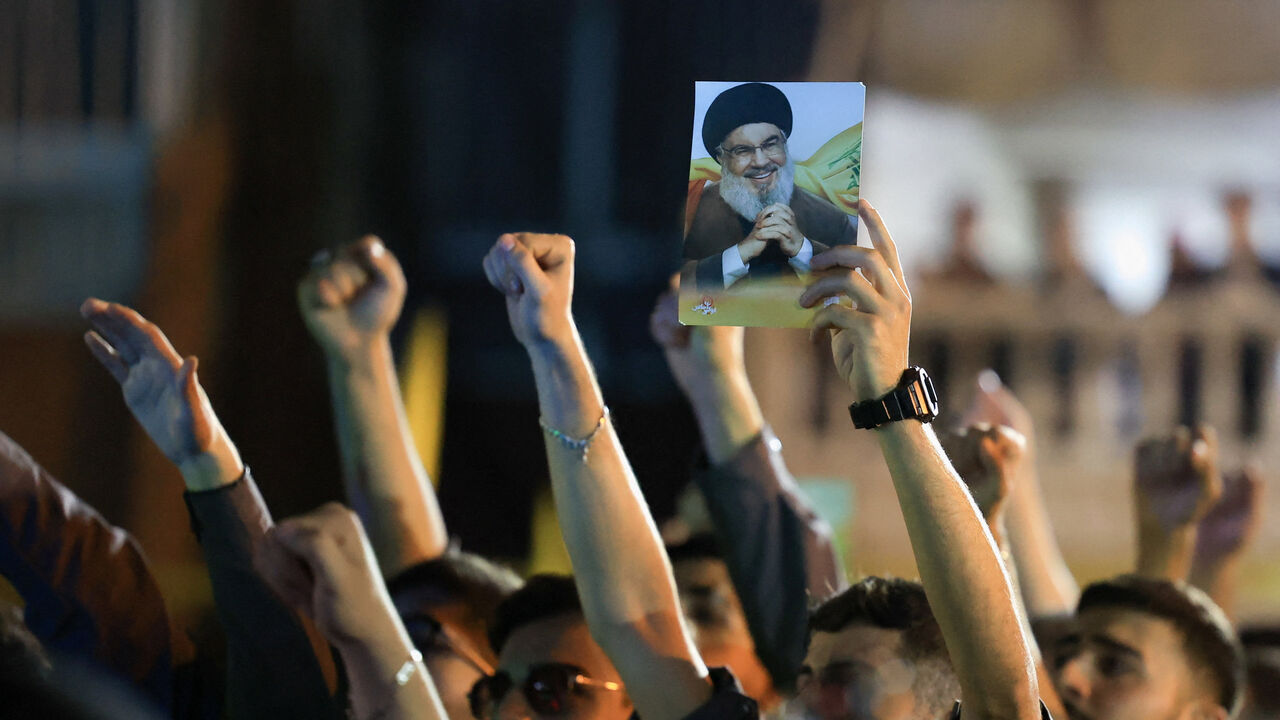
The Lebanese group Hezbollah will on Saturday commemorate one year since the killing of its long-time leader Hassan Nasrallah, whose death marked the beginning of a devastating war that left Lebanon in ruins and weakened the once-powerful movement.
Nasrallah, who had led Hezbollah since 1992, was killed on September 27, 2024, when Israeli bunker-busting bombs struck a Hezbollah compound in Beirut’s southern suburbs. His heir apparent, Hashem Safieddine, was killed weeks later, compounding the group’s leadership crisis.
The war that followed saw Israel launch a fierce air and ground campaign in Lebanon, leaving over 4,000 dead, including more than 300 children, and displacing thousands. A truce is now in place, but Israeli strikes continue, and pressure is mounting on Hezbollah to disarm — a demand the Iran-backed group has rejected.
Nasrallah’s leadership spanned three decades, during which he transformed Hezbollah into Lebanon’s most influential political and military force and a central pillar of Iran’s “Axis of Resistance.” He oversaw the group’s expulsion of Israeli forces from southern Lebanon in 2000, its role in the 2006 war with Israel, and its regional interventions in Syria and Yemen.
Saturday’s commemoration is expected to draw large crowds in Hezbollah strongholds across Beirut, southern, and eastern Lebanon. Current leader Naim Qassem, who took over a month after Nasrallah’s death, will deliver the keynote address.
Tensions have already flared in the run-up to the anniversary. This week, Hezbollah projected portraits of Nasrallah and Safieddine onto Beirut’s iconic seaside rocks, defying orders from Prime Minister Nawaf Salam and the city’s governor, sparking criticism from opponents who decried the use of national landmarks for political displays.
The anniversary highlights not only Hezbollah’s enduring influence but also the deep divisions within Lebanon as it struggles to recover from war and navigate a fragile peace.

