Dar es Salaam, Tanzania – For the family of journalist Manenos Selanyika, closure has remained elusive. Three months after Tanzania’s violent election unrest, they buried only a marker in Lambo village near Mount Kilimanjaro a symbolic grave for a man whose body was never found.
Selanyika, 40, was reportedly shot dead by security forces on October 30 while venturing out for food supplies amid protests that engulfed Dar es Salaam. Neighbours told his family he was killed on Mbezi Africana Street, but police prevented anyone from retrieving his body.
“I don’t want to twist words. It was the police (that shot him),” a relative told AFP, speaking anonymously for fear of reprisals.
The family searched hospitals and morgues for days, combing through dozens of corpses, but never found him. Eventually, they gave up and held a symbolic burial.
Missing Bodies and Mass Graves
Selanyika’s case is not unique. Hundreds of families are believed to be in similar situations, with rights groups accusing authorities of dumping bodies in mass graves.
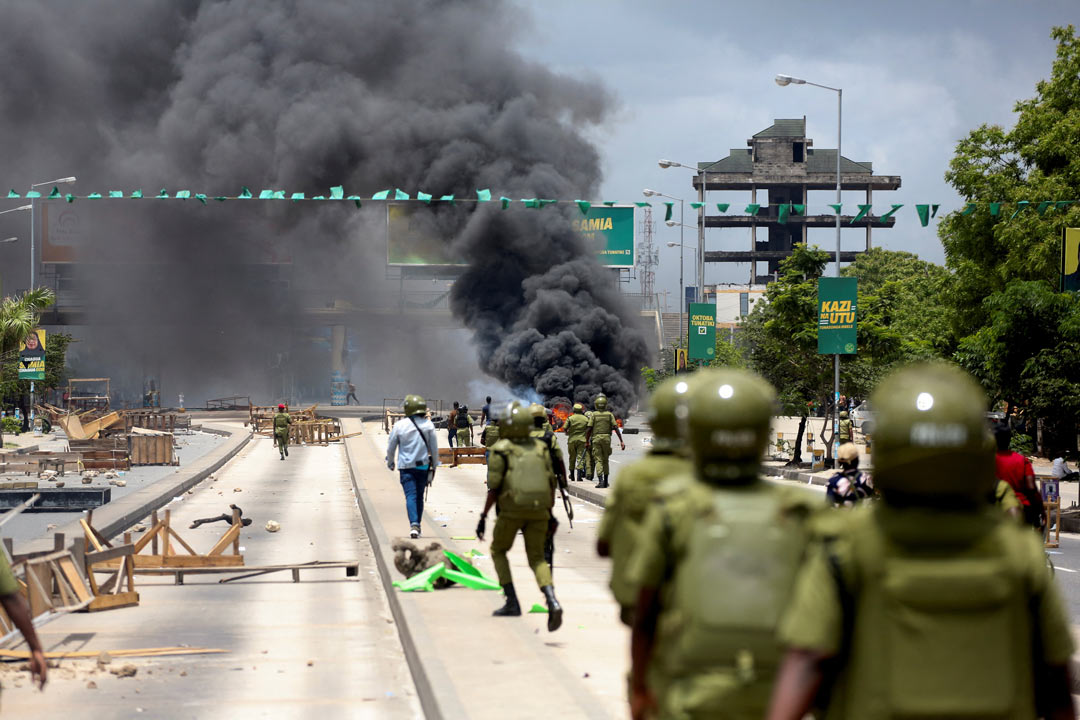
The unrest followed the banning of opposition candidates and a campaign of killings and abductions against critics of President Samia Suluhu Hassan, who was declared winner with 98 percent of the vote. Opposition groups estimate that 2,000 people were killed during five days of violence under an internet blackout.
The government has not released an official death toll and has denied allegations of excessive force.
Families in Limbo
For many, the pain is compounded by uncertainty. Sheila Gyumi (not her real name) lost her husband, a motorbike courier, on election day.
“At that time things didn’t seem tense, everything looked calm. Later, I saw the situation had changed, so I started calling him, but he didn’t answer,” she said.
Her family searched police stations and hospitals but found no answers. Now, she struggles to afford rent and schooling for her child.
Doctors have told AFP that hundreds of corpses were removed from hospital morgues by security forces at the height of the unrest.
Fear and Silence
Rights groups say many victims were innocent bystanders, but witnesses remain too afraid to speak.
“There has been fear for our safety, including the risk of arrest by security agencies,” another of Selanyika’s relatives said.
The Centre for Information Resilience, an independent digital investigation organisation, analysed 185 images and videos from the protests. It found repeated use of live ammunition by security forces and plain-clothed armed men, and identified possible mass graves through satellite imagery.
Media Suppression
Foreign journalists were banned from covering the elections, while local reporters faced censorship and threats. At least one journalist, Godfrey Thomas of Millard Ayo TV, has been charged with treason for reporting on the protests.
A veteran reporter described the period as “extremely difficult,” saying state TV coverage was “completely disconnected from what was happening on the ground.”
Conclusion
Three months on, families like Selanyika’s remain without closure, their grief compounded by unanswered questions and fears of reprisals. While the government has promised investigations, rights groups and independent observers say the unrest has left deep scars not only on Tanzania’s democracy but on the lives of ordinary citizens still searching for justice.