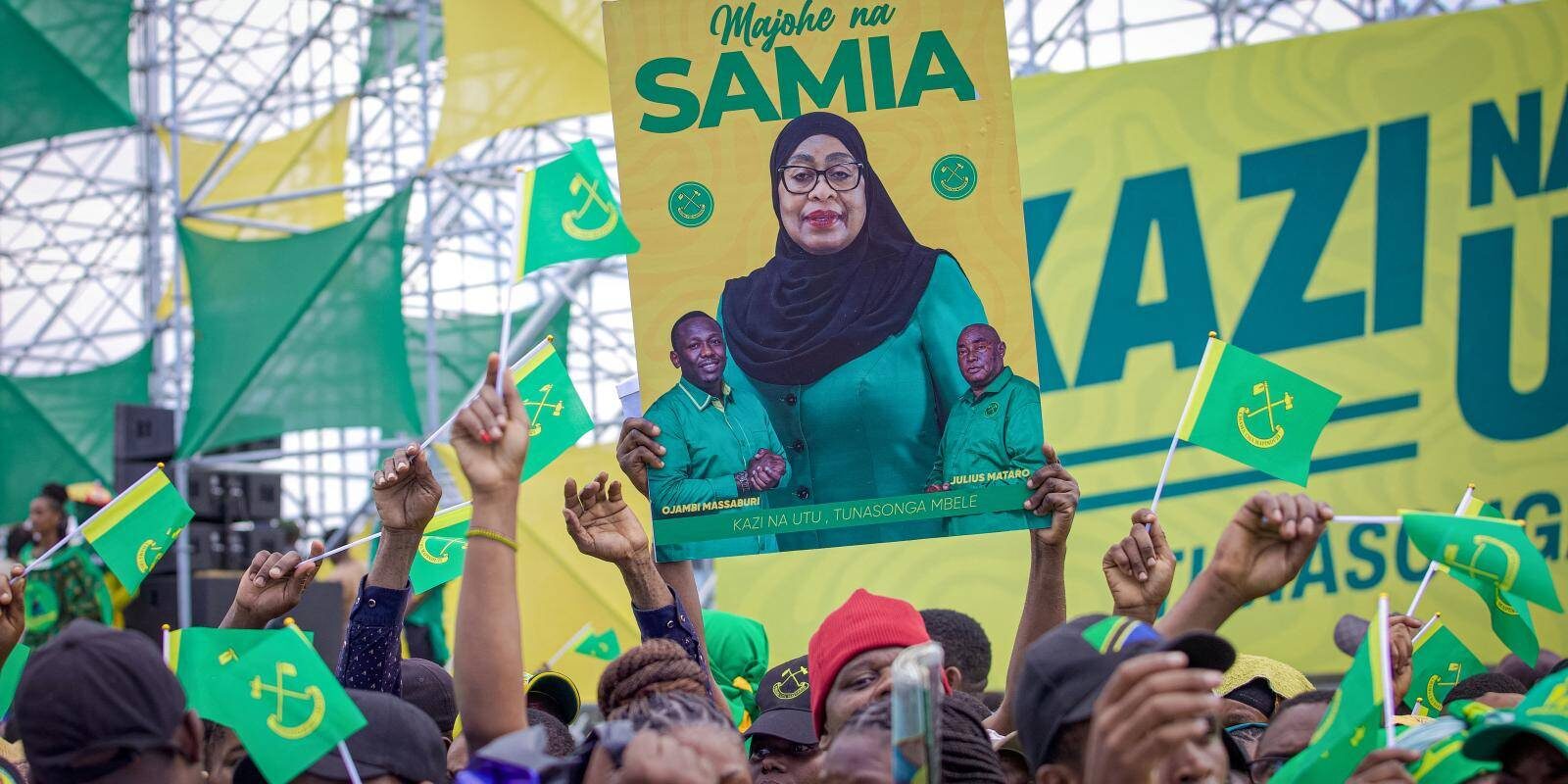
Tanzania heads to the polls on Wednesday, October 29, 2025, amid mounting reports of intimidation, abductions, and killings that critics say have become the “new normal” under President Samia Suluhu Hassan’s administration.
According to Amnesty International, the country is gripped by a “wave of terror,” with faith leaders, opposition members, and activists facing escalating threats and violence ahead of the presidential and parliamentary elections.
President Hassan, 65, is seeking an overwhelming victory for her ruling Chama Cha Mapinduzi (CCM) party similar to the 99% win it claimed in last year’s local elections. However, her main challenger, Tundu Lissu of Chadema, is currently on trial for treason, facing possible execution, while another key opponent, Luhaga Mpina of ACT-Wazalendo, was disqualified on technical grounds.
“Whoever criticises the ruling party is not safe”
Among those caught in the crossfire is Father Charles Kitima, a Catholic priest who was brutally attacked in April after attending a meeting on democracy. Speaking to AFP, Kitima said he suffered severe head injuries and accused authorities of failing to investigate his case.
“The police know who attacked me, but there has been no report. Whoever criticises the ruling party is not safe,” he said.
Abdul Nondo, youth leader for ACT-Wazalendo, described being abducted and beaten after an opposition rally in December 2024. “They told me, ‘You talk too much we’re going to kill you.’ If they want to kill me, let them kill me, but I cannot keep quiet,” he said defiantly.
The Tanganyika Law Society reports at least 83 abductions since President Hassan took office in 2021, with another 20 cases reported in recent weeks. Some victims have been found dead, including Ali Mohamed Kibao, a senior Chadema official whose acid-doused body was discovered in September 2024.
Meanwhile, Humphrey Polepole, a former ambassador to Cuba and once a close ally of Hassan, vanished on October 6, months after publicly criticising her administration. His family later found blood-stained floors and broken doors in his home.
Government officials have not responded to repeated requests for comment but continue to assert their commitment to human rights and good governance.
From reform hopes to repression
When President Hassan assumed office in 2021 following the death of her authoritarian predecessor John Magufuli, there was optimism that her leadership would usher in greater freedoms for the press and civil society. However, analysts say those reforms were short-lived.
“She has done nothing to remove the operatives Magufuli placed in the intelligence service,” said one Dar es Salaam-based analyst, speaking anonymously out of fear of retaliation. “They’re laser-focused on suppressing dissent. What we thought was temporary under Magufuli has now become the new normal.”
He likened the current political climate to “a coup where the military has tasted power and refuses to return to the barracks.”
Stability over democracy
Despite calls for demonstrations on election day, few expect mass protests. Analysts suggest many Tanzanians are prioritising economic stability over political freedoms. The World Bank reported 5.5% economic growth in 2024, driven by agriculture, mining, and tourism.
On the campaign trail, President Hassan has focused on infrastructure expansion and universal health insurance, pledging continued development.
“Citizens are still willing to bet on the ruling party as long as it keeps delivering a level of progress,” noted the analyst.
Even so, observers warn that this progress comes at a steep cost to democracy. Boniface Mwabukusi, president of the Tanganyika Law Society, urged dialogue between the government and opposition.
“They need to open the door and sit at the table,” he said. “That’s the only way Tanzania can move forward peacefully.”