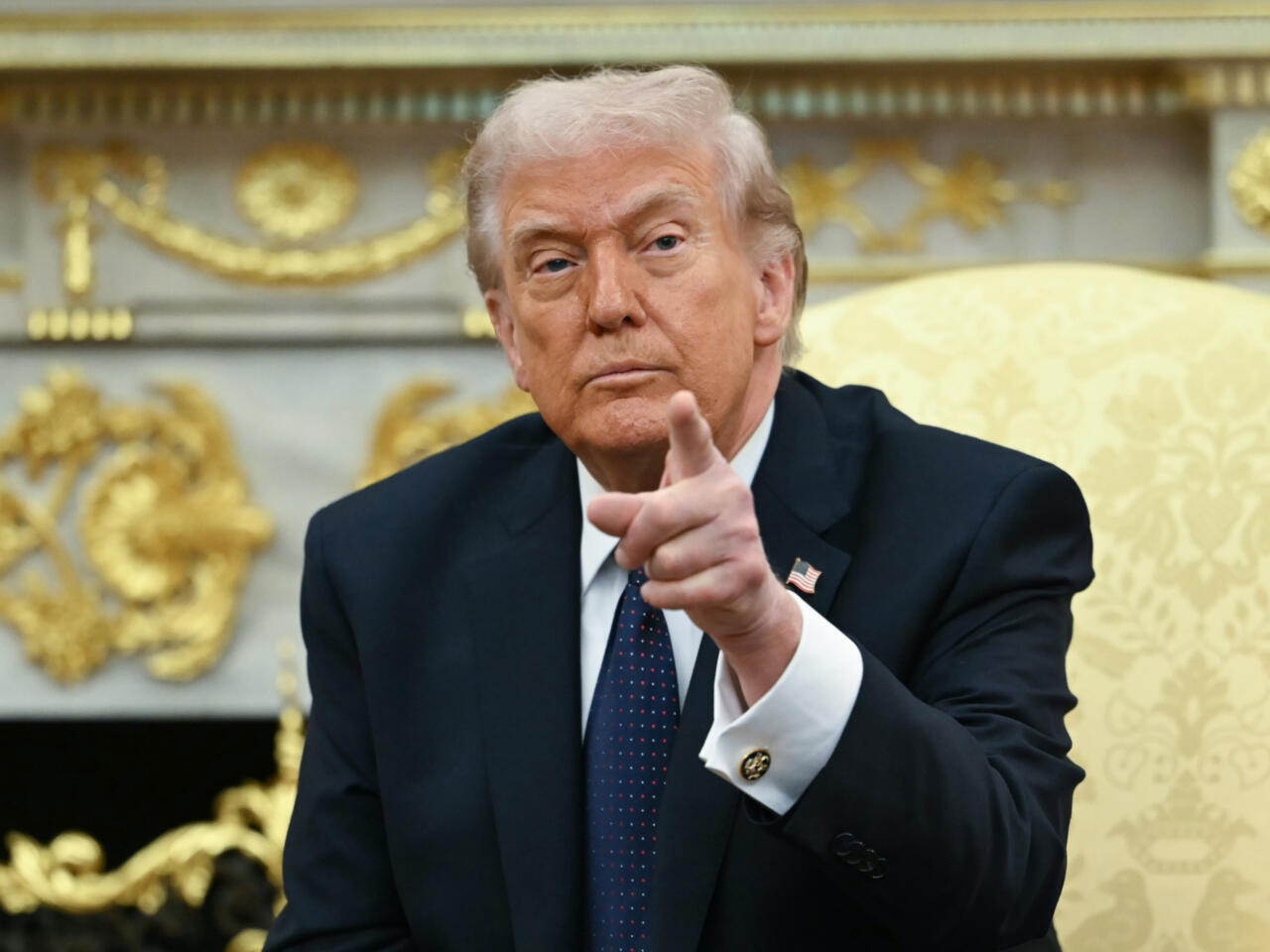
Donald Trump said Monday that the ongoing conflict with Iran could be short-lived, but warned that the situation could escalate significantly if Tehran disrupts global oil supplies.
The comments came as global markets reacted to intensifying tensions in the Middle East following Iran’s appointment of a new supreme leader and continued military exchanges involving the United States and Israel.
Oil Markets React to Leadership Change in Iran
Oil prices briefly surged to their highest levels since 2022 after Iran selected Mojtaba Khamenei as the new supreme leader, succeeding his late father Ali Khamenei. The leadership transition was viewed by investors as a sign that Tehran could take a more hard-line approach as the conflict enters its second week.
However, prices later retreated and U.S. stocks rebounded amid speculation that the conflict may not last long.
Speaking to Republican lawmakers at his golf club near Miami, Trump suggested the military campaign could end quickly.
“We took a little excursion to the Middle East to get rid of some evil. And I think you’ll see it’s going to be a short-term excursion,” he said.
Warning Over Strait of Hormuz
Trump also warned that any attempt by Iran to disrupt oil shipments through the strategically important Strait of Hormuz would trigger a far stronger U.S. response.
“If Iran does anything that stops the flow of oil within the Strait of Hormuz, they will be hit by the United States of America twenty times harder than they have been hit thus far,” he wrote on social media.
The Strait of Hormuz is one of the world’s most critical energy chokepoints, with a significant share of global oil shipments passing through the narrow waterway each day.
Iran Signals Continued Resistance
Iranian officials responded by signalling that Tehran would determine the timeline of the conflict.
Ali Mohammad Naini, a spokesperson for Iran’s paramilitary Islamic Revolutionary Guard Corps, said Iran would decide when the war ends.
Iran’s Foreign Minister Abbas Araghchi also stated that Tehran was prepared to continue military operations for as long as necessary.
“The firings continue, and we are prepared. We are well prepared to continue attacking them with our missiles as long as needed and as long as it takes,” Araghchi said in an interview with PBS.
He also dismissed the possibility of negotiations with Washington, citing past experiences with U.S. diplomacy.
Impact on Global Energy and Civilian Life
The ongoing conflict has already disrupted significant supplies of oil and natural gas to global markets, contributing to rising fuel prices, particularly in the United States.
Meanwhile, the fighting has forced civilians and foreign nationals to flee major business centres across the region. Bombings have reportedly struck military installations, government buildings, oil facilities, water infrastructure, hotels, and at least one school.
Millions of residents have sought shelter as the conflict intensifies.
Diplomatic Efforts and Global Concerns
Amid the escalating tensions, Trump also held a phone conversation with Vladimir Putin, president of Russia, to discuss the conflict and potential diplomatic solutions.
According to Kremlin foreign affairs adviser Yuri Ushakov, Putin suggested several ideas for a rapid political and diplomatic settlement following discussions with Gulf leaders and Iranian President Masoud Pezeshkian.
Despite those diplomatic efforts, uncertainty remains high as both sides continue military operations and global markets closely monitor developments in the Middle East.